




What Is Ambient Lighting? A Guide to Home General Illumination
Ambient illumination uses high-brightness LED light sources for daily living and supporting timeless home design. Learn how to choose it right!
- -Ambient lighting is often the first light switched on in a space and is essential for non-specialized activities, making it crucial for everyday living
- -Good ambient lighting is omnidirectional, using wide beams to reduce shadows and ensure uniform light.
- -Blending uplights and downlights increases brightness and creates a welcoming atmosphere.
- -Understanding the differences between ambient lighting and other types, such as task or accent lighting, is key to creating comprehensive lighting plans for any home.
Have you ever taken a moment to just sit in your living room and feel the atmosphere around you? Or noticed how the light in your entryway makes coming home feel different at night?
Every day, we use our spaces in two essential ways that often go unnoticed: simply being and moving through them. Because these moments don’t involve tasks, tools, or highlighting a specific object, we rarely think about the lighting that supports them.
That’s exactly where ambient lights come in. They serve as the primary source of light in a room—providing a balanced, evenly distributed glow that fills the space rather than focusing on a single point. In this article, we’ll cover everything you need to know about ambient lighting for your next remodel or new home project.
Ambient Light: A Must in Classic Home Design Plans
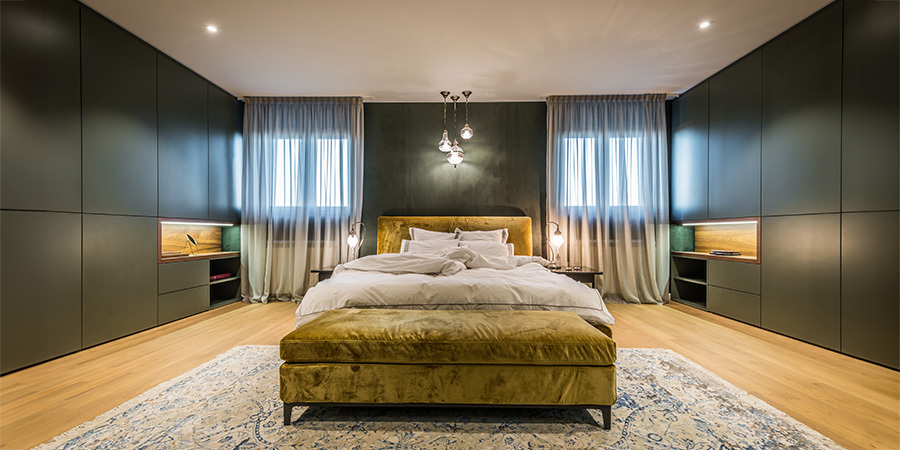
When your kids ask you to “turn off the light” at bedtime, they’re almost always referring to the ambient lighting. Likewise, it’s typically the first light you switch on when pulling into the garage at night. In most spaces, the main, ambient central fixture is what we instinctively mean when we say “the room light.” That distinction matters.
As new ways of designing and layering light have evolved—for example, kitchen accent lighting to highlight tile and china or under-cabinet lights for cooking visibility, and other focused solutions—we sometimes overlook this more traditional, foundational approach: illuminating the space itself from a central, primary source.
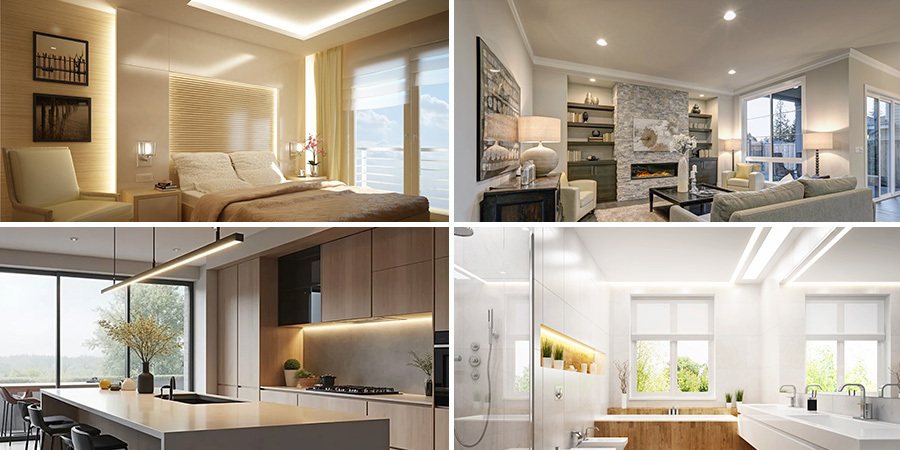
Here are a few key ways ambient lighting plays a fundamental role in any space:
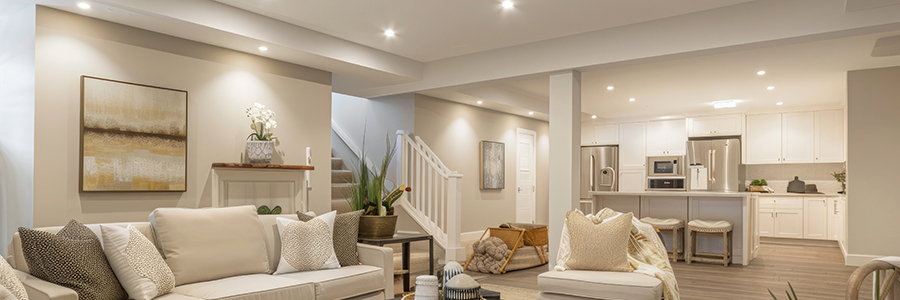
- In the living room, ambient lights create a warm glow for cozy movie nights or casual conversations with friends and family.
- In the bedroom, a flush-mount ambient fixture lays out an even base layer that supports dressing, cleaning, and daily routines.
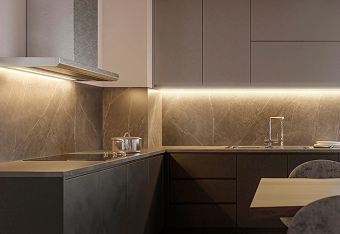
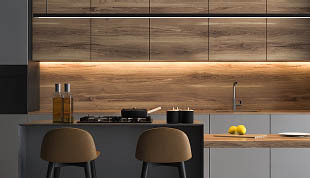
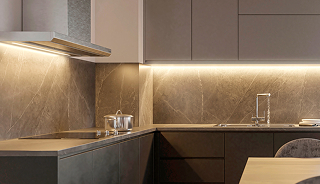
- In the kitchen, spaced recessed lights or a main island pendant ensure consistent brightness across countertops, circulation areas, and seating zones.
- In the bathroom, ambient lighting typically includes ceiling-mounted fixtures or cove lights that fill the room with balanced illumination beyond the vanity area.
- In the study or home office, a central fixture or grid of downlights establishes a well-lit foundation that supports productivity and order.
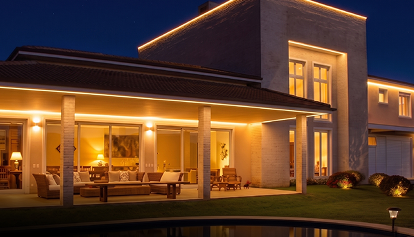
- And in outdoor areas, ambient lighting often consists of overhead soffit lights, wall-mounted fixtures, or post lights to benefit from social spaces like gazebos after dark.
General Illumination Key Features: What to Look For
As we’ve mentioned, ambient lighting is defined by its ability to illuminate a whole room brightly, covering every nook. To accomplish this, your lighting must meet specific standards for lighting quality, distribution, and brightness levels:
1. Light Direction & Focus
These describe how your light is projected and how focused its scope is.
Unidirectional vs Omnidirectional Light
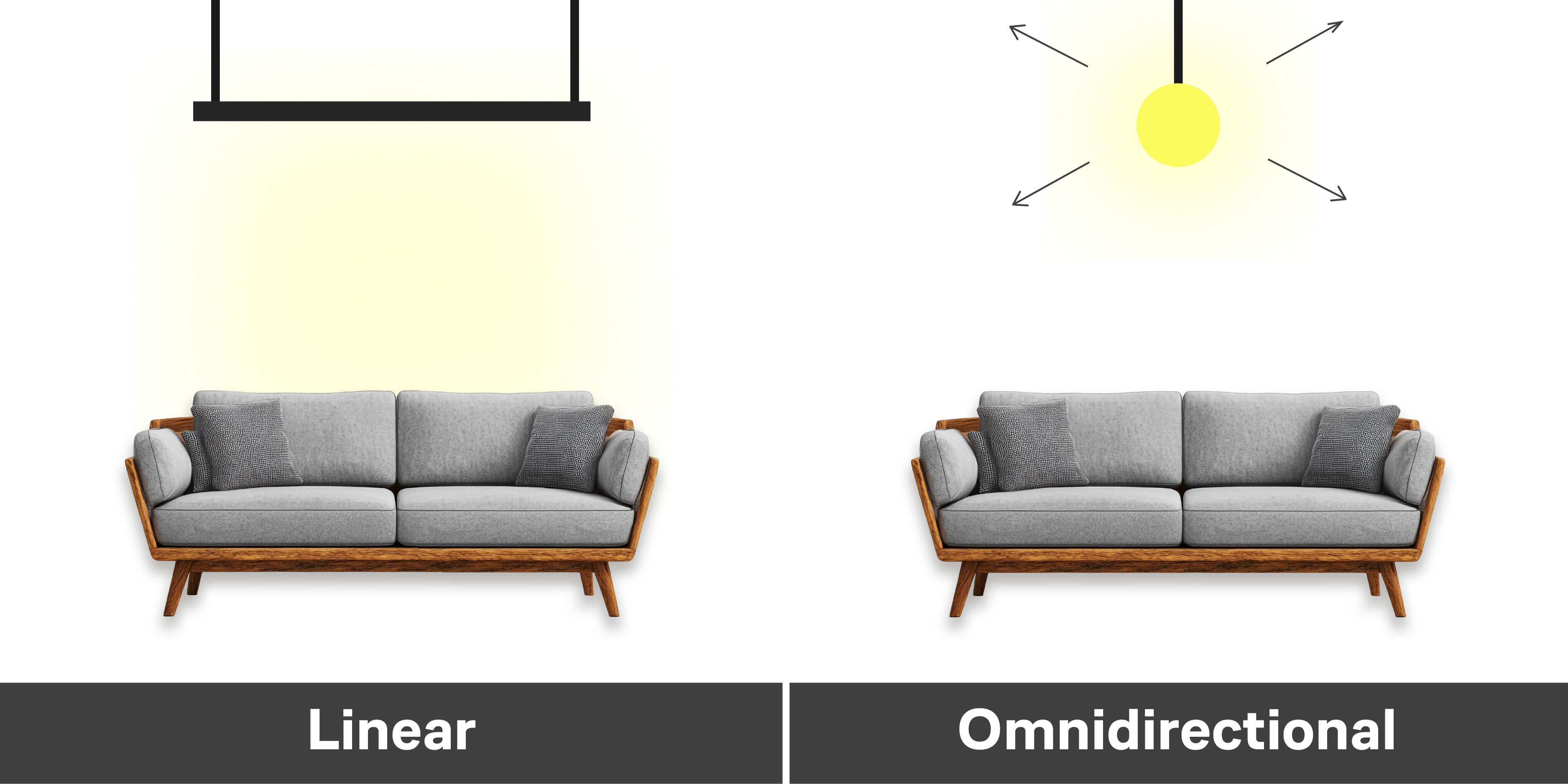
Ambient lighting aims to illuminate an entire room, minimizing shadows and providing enough brightness for general, non-specialized activities. For that reason, it should be omnidirectional, distributing light in all directions rather than targeting a specific focal point unidirectionally, as accent or task lighting does.
This can be achieved with a central fixture—such as a round ceiling light that delivers 360-degree illumination—or through a geometric layout of linear lighting (for example, linear washes along all four walls of a rectangular garage). It can also be accomplished through a multi-fixture approach, where several products work together to evenly fill the space with light.
Beam Angle
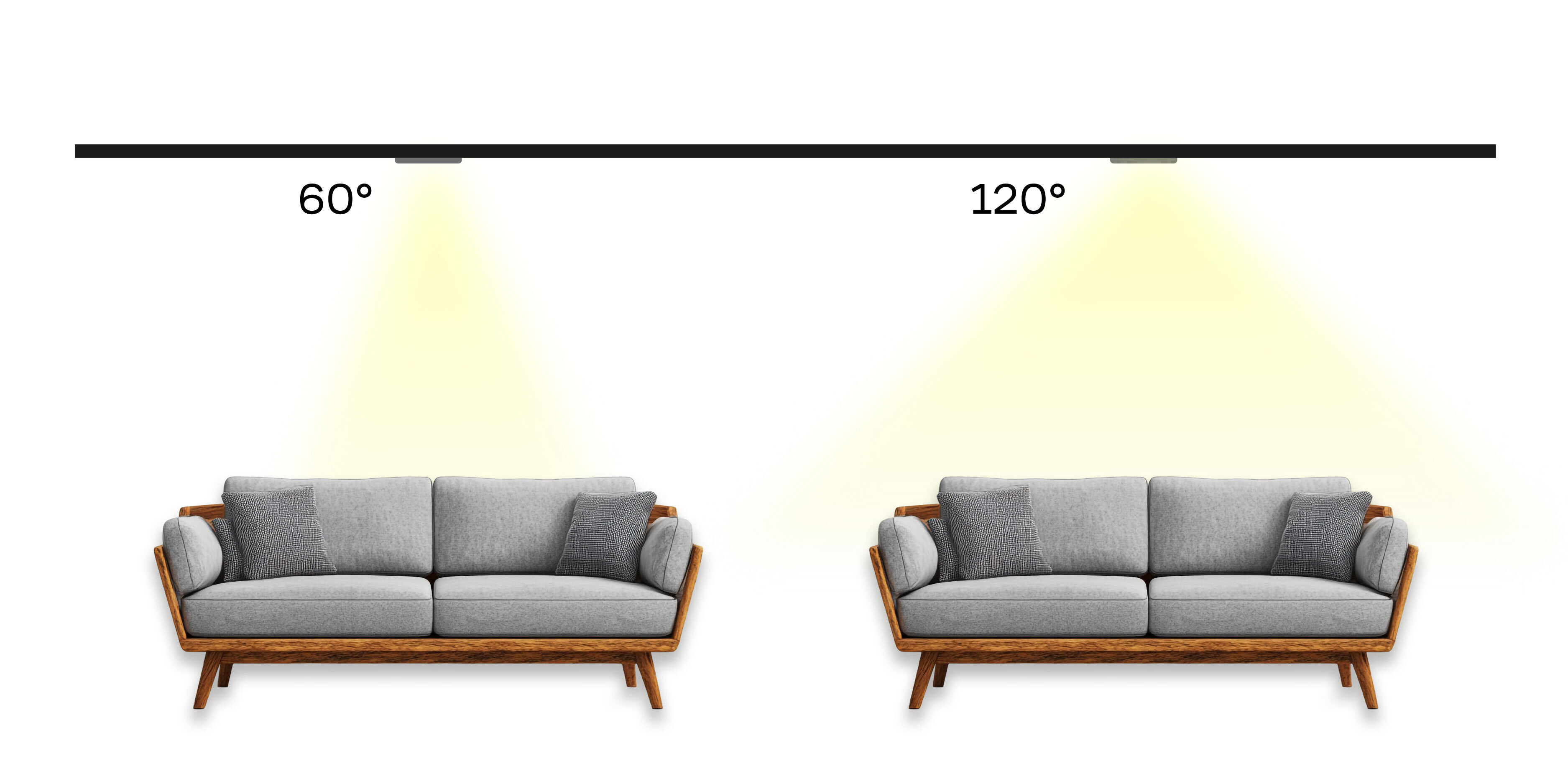
This determines how wide or focused a light source spreads its illumination, and in ambient lighting, wider is almost always better. Wide beam angles (typically 60° to 120° or more) allow light to disperse evenly across a space, reducing harsh contrasts and dark corners.
For example, in a living room with recessed ceiling lights, using wide-beam fixtures ensures the sofa, coffee table, and surrounding walls all receive consistent illumination instead of isolated bright circles on the floor. In a kitchen, wide distribution helps the entire space feel uniformly bright rather than spotlighting only the island while leaving perimeter counters dim.
Puck lights’ or other fixtures’ narrow beams (under 40°), on the other hand, are better suited for accent lighting—such as highlighting artwork or architectural features—because they create intentional focal points.
Proper spacing is equally important: If recessed downlights are placed too far apart in an 8-foot ceiling, you may see scalloped light patterns or spotlighting effects, where bright pools of light are separated by visible shadows. Correct beam selection combined with thoughtful spacing ensures smooth transitions and balanced brightness throughout the room.
Downlight vs Uplight
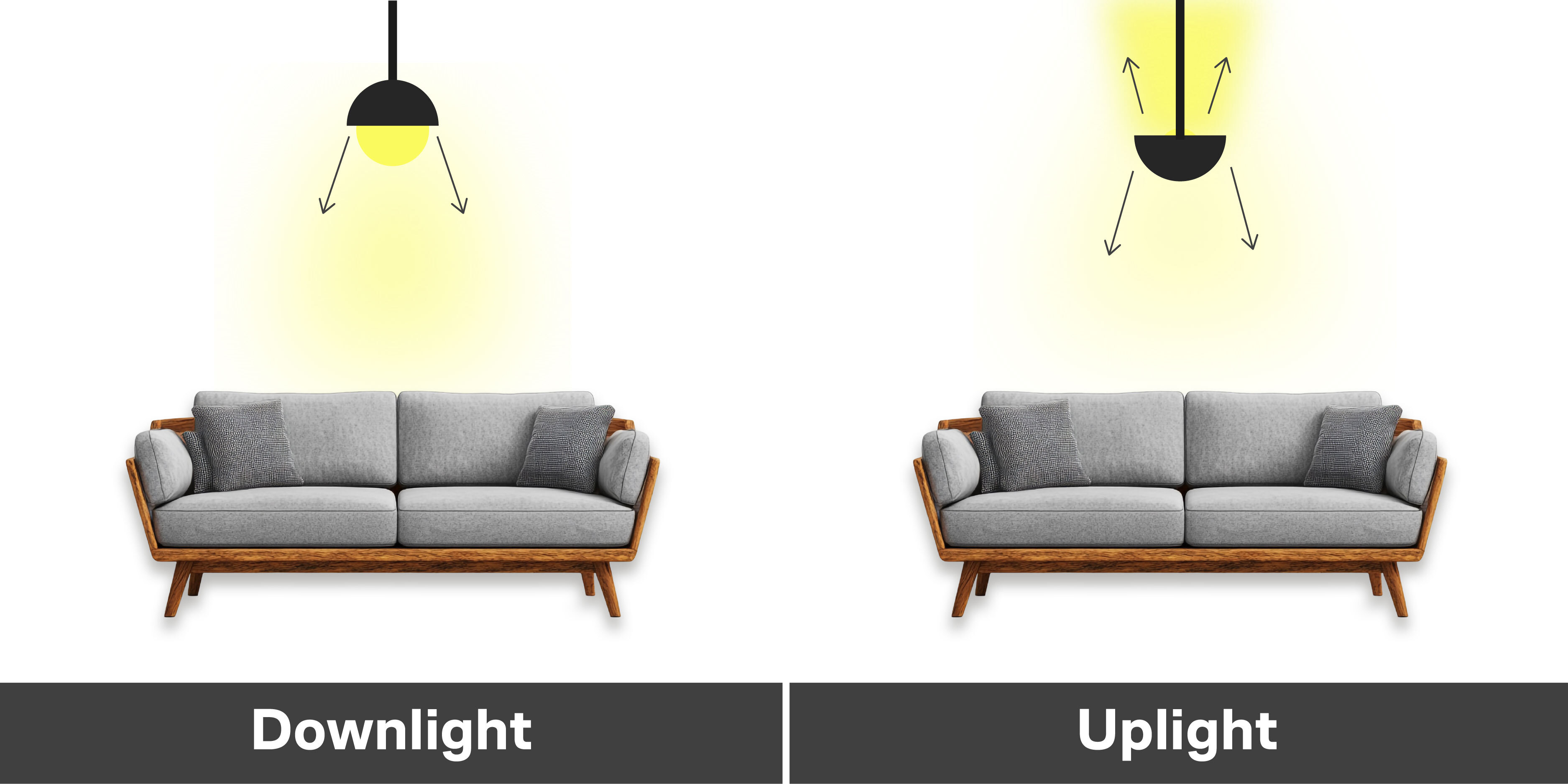
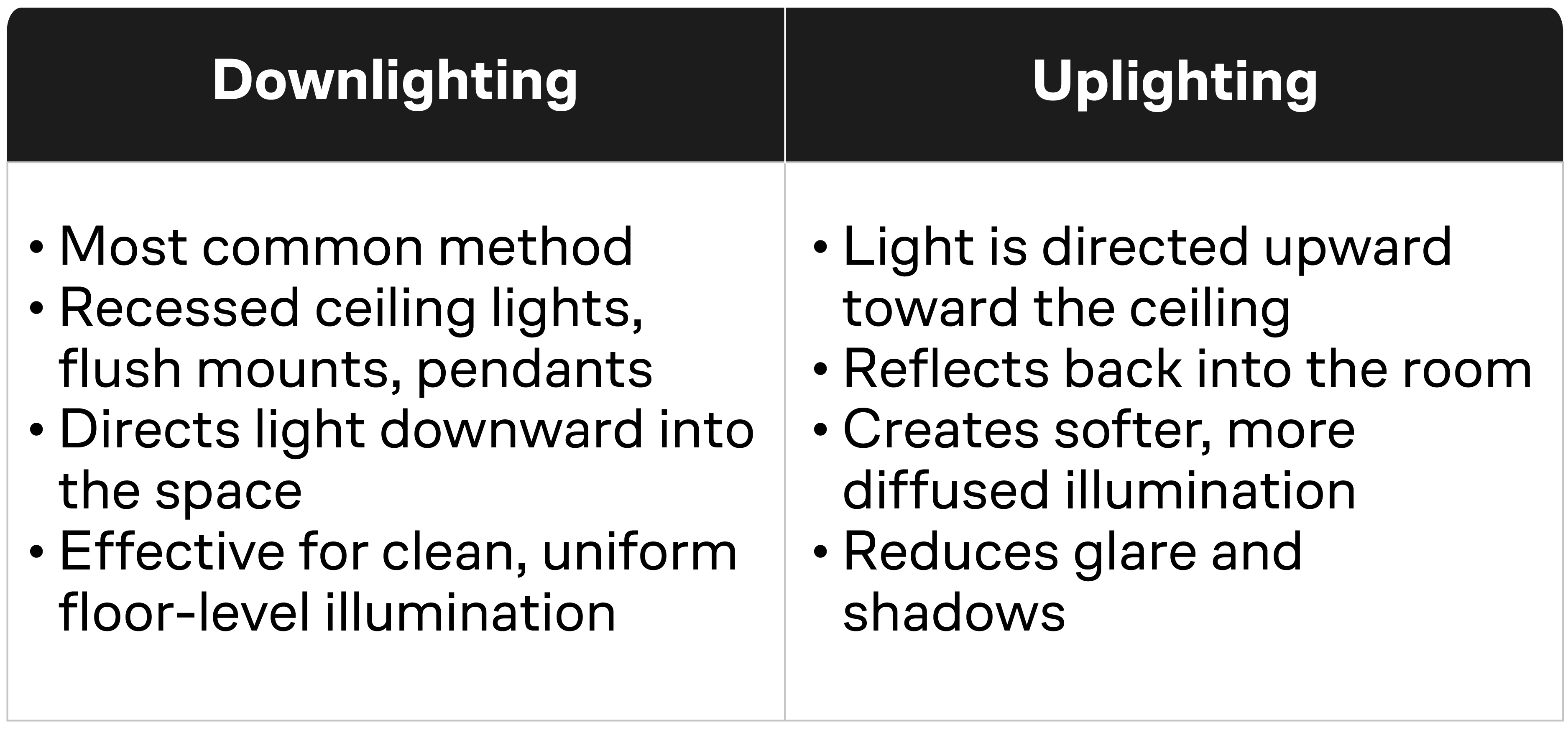
The best approach when planning a space’s primary lighting is to combine uplights—fixtures that shine upward—with downlights—fixtures that shine downward. Uplights are often integrated into a ceiling cove in a living room or bedroom, directing light upward so it reflects off the ceiling and softly fills the space below.
Downlights, on the other hand, project light downward. Because they’re typically visible and often positioned centrally (for example, a chandelier in the middle of a tall ceiling), they should incorporate some form of diffusion to prevent glare and discomfort from excessive brightness.
Together, they combine to create a complete lighting solution with the following benefits:
Direct vs Indirect Light
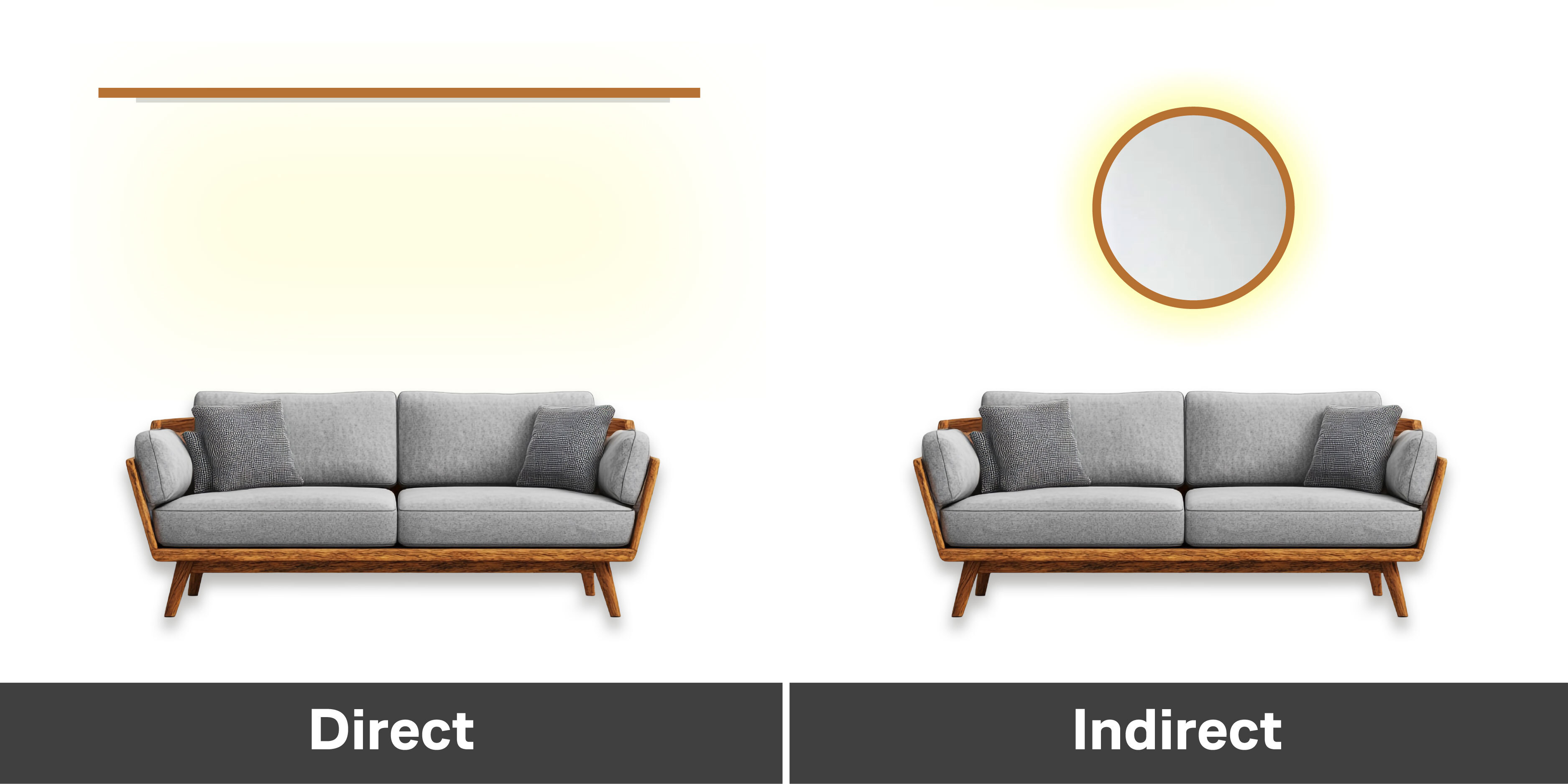
If your space relies on direct lighting—the most common form of ambient illumination—it must be diffused to prevent eye strain when you’re in or moving through the room. That’s why you should look for milky or frosted bulb finishes in central fixtures and avoid fully transparent designs, especially since we’re talking about high-brightness light sources.
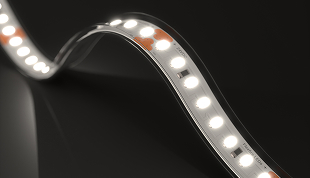
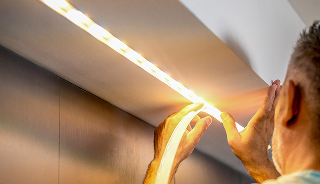
If you’re using LED strips—for example, recessed into wall or ceiling grooves—the best practice is to pair them with an aluminum channel and a frosted cover. Not only does this eliminate harshness, but it also creates a cleaner, more refined look.
For indirect lighting applications designed to illuminate entire rooms—such as behind a bathroom vanity mirror, inside a bedroom cove, or along a closet ceiling—proper diffusion is equally important. Alternatively, if using LED strips, make sure they have a high enough LED density to prevent visible dotting on reflective surfaces like ceilings or walls.
2. Brightness Level, Dimming & Positioning
These terms describe how bright your ambient lighting should be and how evenly it should fill the room without overpowering it.
Lumens Comparison
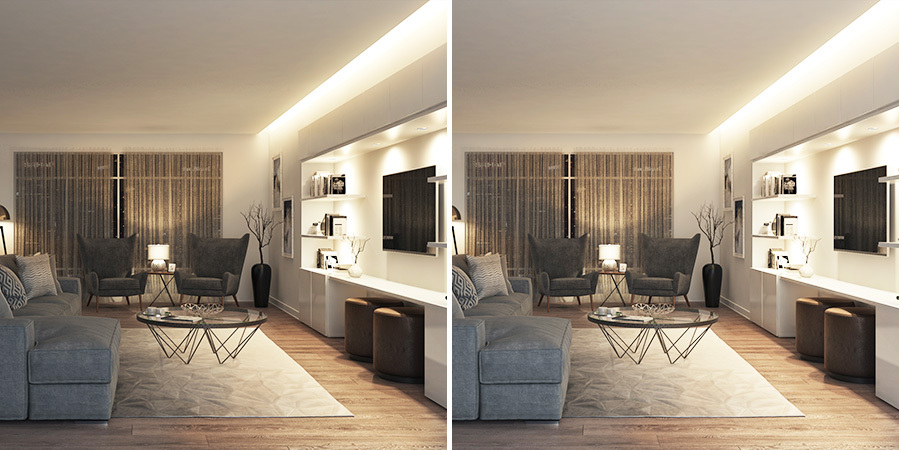
Your goal is to provide enough overall brightness to make your space feel open and functional, but not harsh or overlit. Instead of thinking in watts (which only measure energy use), it’s far more helpful to think in lumens per square foot, which tells you how much actual light the surfaces of your room are receiving.
For example, a cozy entertainment room where you relax or watch TV typically feels comfortable at around 10–20 lumens per square foot. A kitchen, where you’re cooking and moving around sharp tools, usually needs more clarity closer to 30–40 lumens per square foot. And if you’re lighting a home office or workspace where focus matters, you may want 30–50 lumens per square foot to keep the room feeling bright and alert.
Ceiling Light Height from Floor
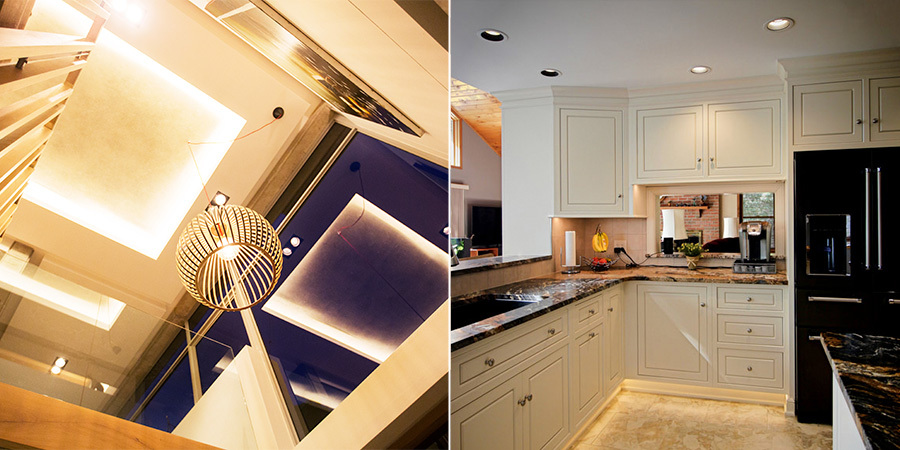
Keep in mind, though, that these numbers aren’t rigid rules. Ceiling height, wall color, and reflective surfaces will all influence how bright the space actually feels. The same fixture can feel perfectly balanced in one room and completely off in another, simply because of vertical space or surface color.
If you have taller ceilings (say 10 or 12 feet), standard fixtures may leave the room feeling dim at eye level, which is why a higher lumen count or indirect cove lighting can help bring that brightness back down in a soft, even way.
On the other hand, if your ceilings are around 8 feet high, overly bright or narrow, downlights can feel harsh and uncomfortable. In that case, wide beam angles and diffused fixtures create a softer glow that doesn’t overwhelm the space.
Finishes also make a difference. If your walls and ceilings are white or lightly colored, they’ll naturally reflect and amplify light, meaning you may not need as much output. But if you have darker paint, wood paneling, or matte finishes, those surfaces absorb light—so you’ll likely need more lumens to achieve the same overall brightness.
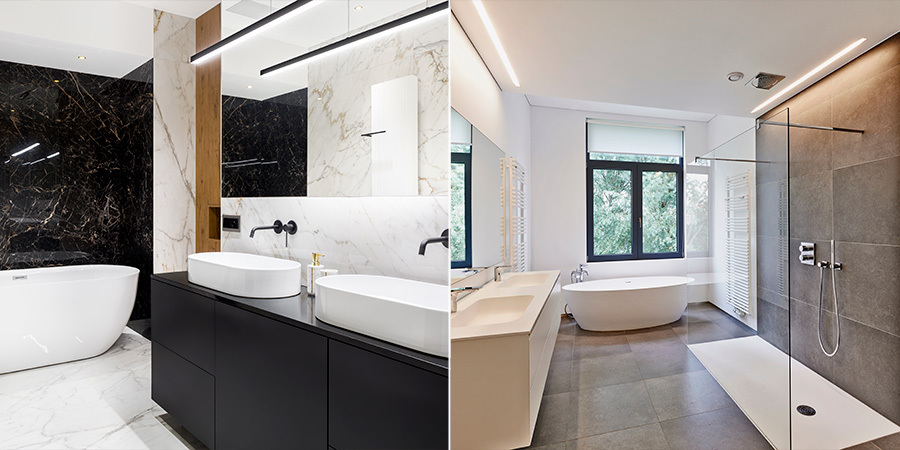
The key is designing your lighting around your home’s architecture, not forcing a one-size-fits-all solution. Here’s how to think about it in practical terms:
- Low Ceilings (~8 ft): Choose wide-beam, diffused downlights to avoid glare.
- High Ceilings (~10–12+ ft): Increase lumen count or incorporate indirect cove lighting.
- White or Reflective Surfaces: Moderate brightness.
- Dark or Matte Finishes: Plan for higher brightness to compensate.
Dimmable Light
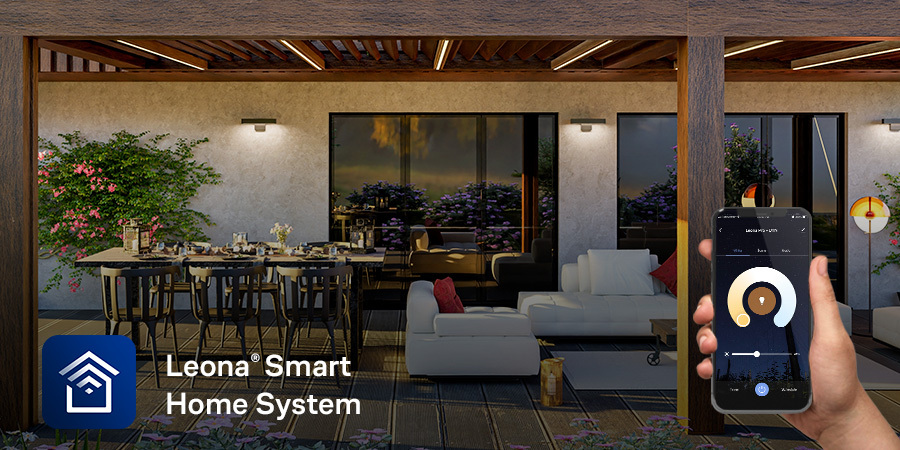
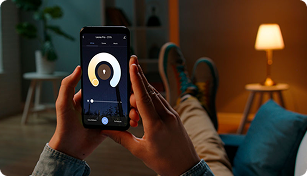
Having dimming control over your ambient lighting, whether through a wall dimmer or a smart home system, completely changes how your space feels and functions. Instead of being locked into one brightness level, you can adjust the overall illumination to match the moment, respond to shifting daylight, and avoid using more energy than necessary.
For example, if you’re lighting an outdoor patio or terrace, you might keep the ambient lighting brighter at the beginning of the evening—especially while guests are arriving, food is being served, or people are moving around. As the night settles in and the gathering becomes more relaxed, lowering the overall brightness instantly makes the space feel more intimate.
3. LED Light Color & Quality
These describe the appearance and quality of your ambient lighting itself, which directly shapes how your entire space feels and how naturally colors, textures, and finishes are perceived throughout the room.
Correlated Color Temperature

The CCT of your white lighting, measured in Kelvin, determines how warm and golden (below 4000K) or how cool and energizing (above 4000K) your space will feel.
When planning ambient lighting, the first rule is consistency. If your room already includes task or accent lighting, make sure your ambient layer matches the same CCT. Mixing different color temperatures in the same visual field can create a noticeable clash, making the space feel unintentionally disjointed.
If you’re starting from scratch and selecting a single CCT for the entire room, warm white hues are the most reliable choices:
- 2700K (Incandescent-Like): It’s the gold standard for living rooms and bedrooms because it enhances rich textiles and makes skin tones look natural and healthy.
- 3000K (Slightly Crisper): The ideal warmth and invitingness for kitchens or bathrooms where you want the space to feel clean and bright without crossing the line.
If your system is smart-enabled, it’s absolutely worth investing in tunable white technology. This allows you (either manually or automatically, depending on the product) to adjust CCT throughout the day and even program schedules that align with your circadian rhythm.
Because ambient lighting is the one we turn on most often and that our eyes are exposed to from every angle, it has the greatest impact on how we feel under it. That makes it the most important layer to optimize for well-being, sleep, and metabolism—all of which can be achieved by setting cooler tones during the day and warmer, softer tones in the evening.
High-CRI Light
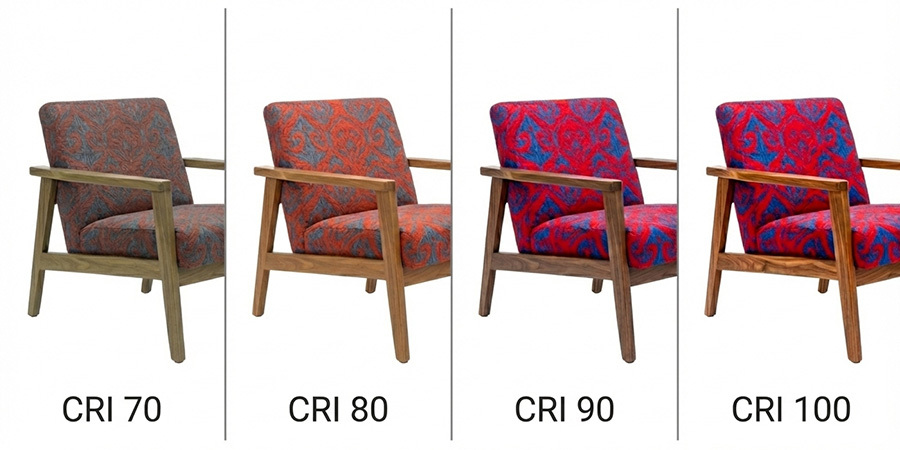
In most cases, a high CRI—meaning your light source accurately reproduces surrounding colors with vibrancy—is considered essential for task and accent lighting. Task lighting often requires it, whether you’re evaluating the health of a plant or the freshness of produce; accent lighting, meanwhile, benefits from it to reveal the true richness of architectural details and decor.
When it comes to ambient lighting, there are two ways to think about it. If you’re lighting a space like a home office and already have high-CRI task and accent fixtures installed, it’s best to keep your ambient lighting at a similar CRI (ideally 90 or above). This prevents visible inconsistencies in how colors appear across the room.
Mixing a low-CRI ambient layer with high-CRI task lighting can create subtle but noticeable clashes in tone and vibrancy, plus two other drawbacks:
- Color Deadness: Low-CRI light often lacks strong R9 values (saturated red). Without those red tones, wood flooring can look greyish, skin tones may appear pale, and colorful rugs or tapestries can feel muted.
- The “Sadness” Effect: Even if the room is technically bright, low CRI can make it feel flat or uninspiring because colors (like book spines’) don’t stand out as they should.
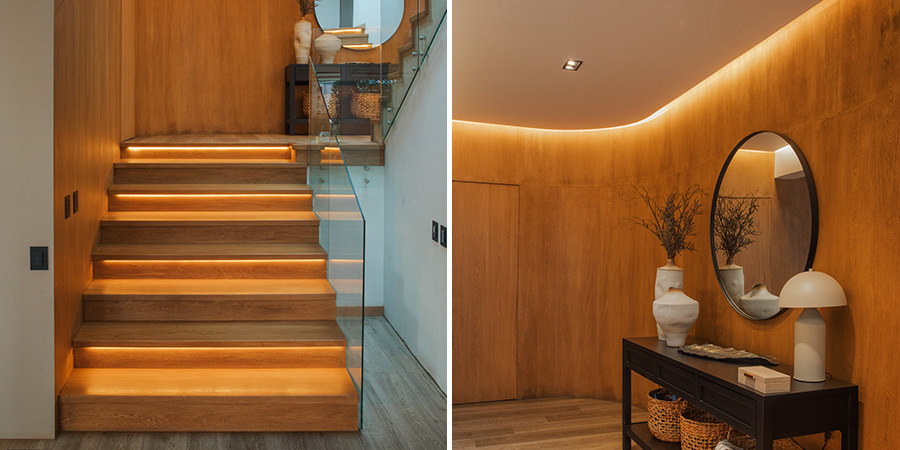
Where you can reasonably compromise—especially if budget is a concern—is in transitional areas of the home where you’re not spending extended time. For hallways and stairwells (unless artwork is involved), garages or laundry rooms (unless you’re matching paint or fabrics), and outdoor pathway lighting, a CRI around 80 is usually enough.
RGB Color LED Lights
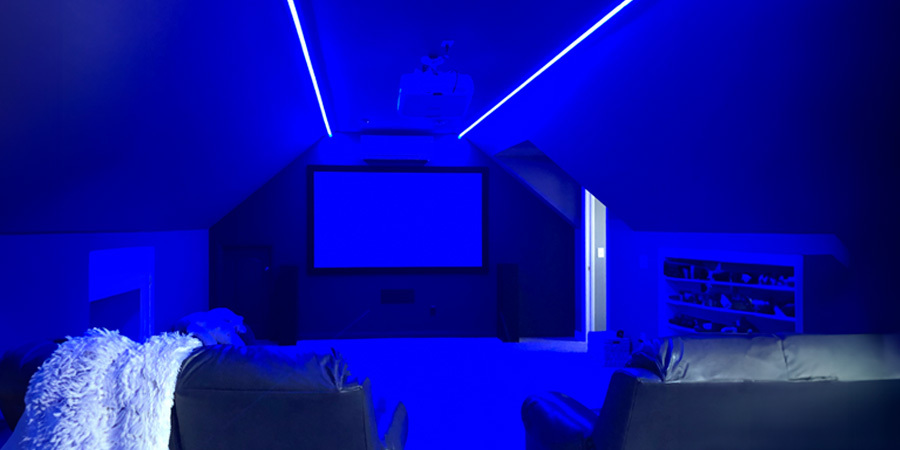
While many homeowners prefer to preserve the clean, timeless look associated with white light—and while general lighting typically needs to provide a certain level of clarity for everyday, non-specialized tasks—there are opportunities in specific spaces to introduce color through ambient lighting.
This is especially true in themed or entertainment-focused rooms, where mood matters more than brightness. For example, if you’re designing a game room, you might choose ceiling fixtures or wall sconces that cast a purple glow as the primary ambient layer. The same approach works well in spaces like man caves, lady lairs, or dry and wet bars, where atmosphere takes priority over visibility.
For added flexibility, you can opt for solutions that offer both color-changing modes and white light. That way, you can enjoy vibrant ambient tones during gatherings or downtime, while still having the option to switch to a crisp white setting when you need to clean or reset the space.
How to Add Ambient Lighting to Your Home
Now that you have a clear understanding of what makes LED ambient lighting effective—and the key features behind it—the next step is putting that knowledge into action with a simple, practical plan for incorporating it into your home.
1. Determine How to Find the Center of a Room & Other Placements
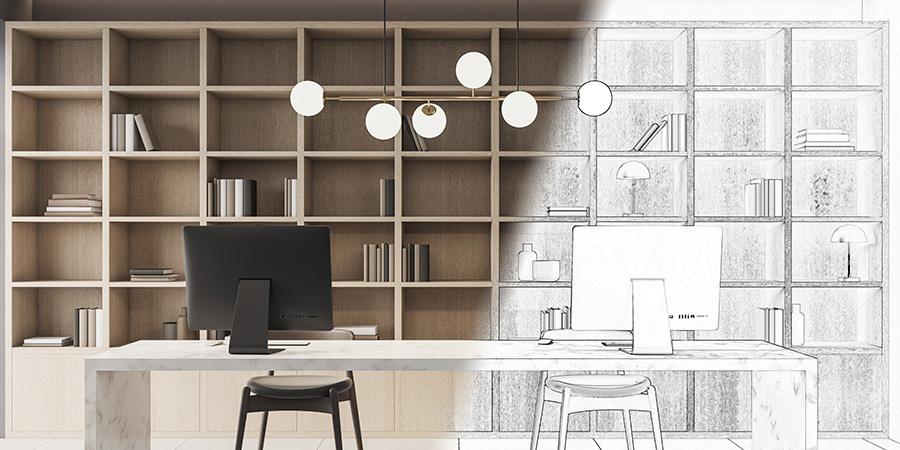
When planning ambient lighting, start by thinking about placement. In most rooms, the center of the ceiling plays a key role—it’s often the most efficient place to distribute light evenly across the space. From there, you can expand outward, using perimeter, recessed, or indirect solutions to eliminate shadows and create balance.
The LED Ambient Light Applications Homeowners Love Most
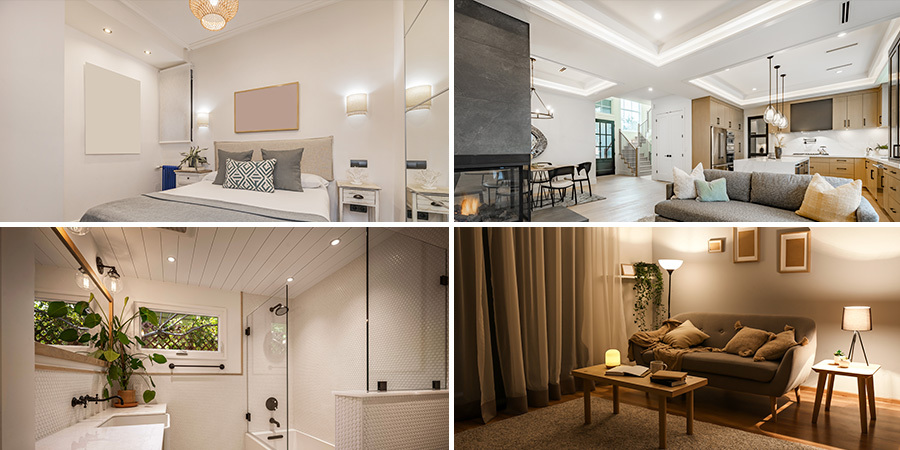
The goal is to ensure the room feels consistently illuminated from wall to wall, not just bright in one isolated area. To achieve that balance, consider working with a lighting expert to implement or thoughtfully combine one or more of the following ambient lighting applications:
- Central Light: A diffused flush-mount fixture, pendant, or chandelier placed in the middle of the ceiling to anchor the room and provide broad, even illumination.
- Recessed Downlight Ceiling: Evenly spaced fixtures that extend coverage beyond the center, preventing dark corners in kitchens or bedrooms.
- Soffit or Cove Lighting: LED strips or fixtures hidden along ceiling recesses to bounce light upward and soften the overall atmosphere.
- Above-Cabinet Lighting: Lights installed on top of kitchen cabinets to cast light upward and bounce off the ceiling, creating a nice glow throughout the room.
- Modern Wall Sconces: Supplemental ambient lighting with upward throw along hallways or larger rooms to support ceiling fixtures.
- Floor Lamp and Shade: Portable solutions that reflect light off the ceiling to brighten dim corners.
2. Find the Best Lighting Products for Your General Illumination
It’s wise to partner with a company that not only stands behind its products with strong warranties but also has a deep understanding of how ambient lighting should perform in real spaces. Flexfire fits that profile—and these ambient-ready solutions are a great place to start:
LED Strip Lighting
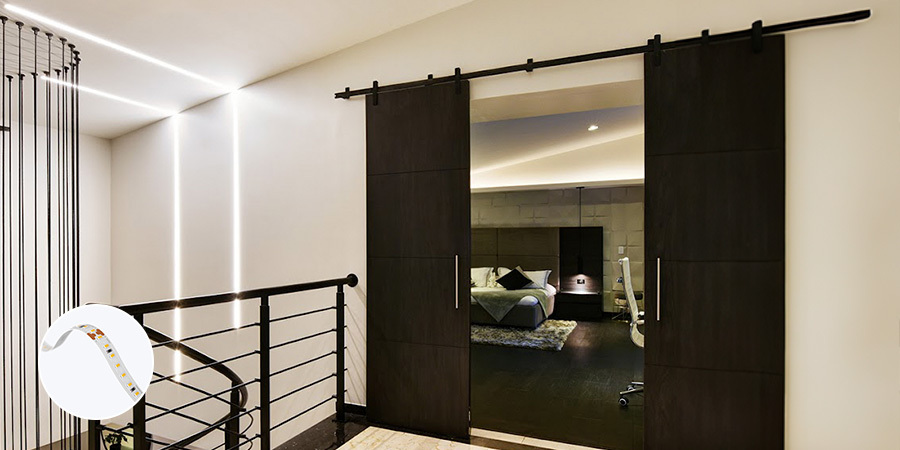
Our Architectural Series LED Strip delivers the brightness needed to illuminate an entire room from a ceiling cove when paired with a proper diffuser, or from a recessed wall groove installed inside a suitable aluminum profile.
LED Smart Bulbs
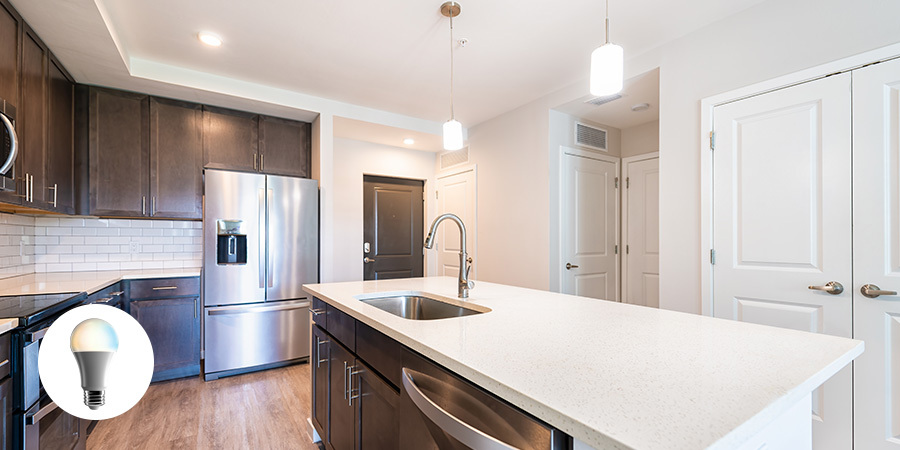
Our Leona® Smart White Bulbs are ideal for most central pendant fixtures or floor lamps placed around the perimeter of your living room, bedroom, or any space in your home. When connected to the Leona® system, their automatic tunable white technology allows for circadian CCT shifts throughout the day.
LED Cove Lights
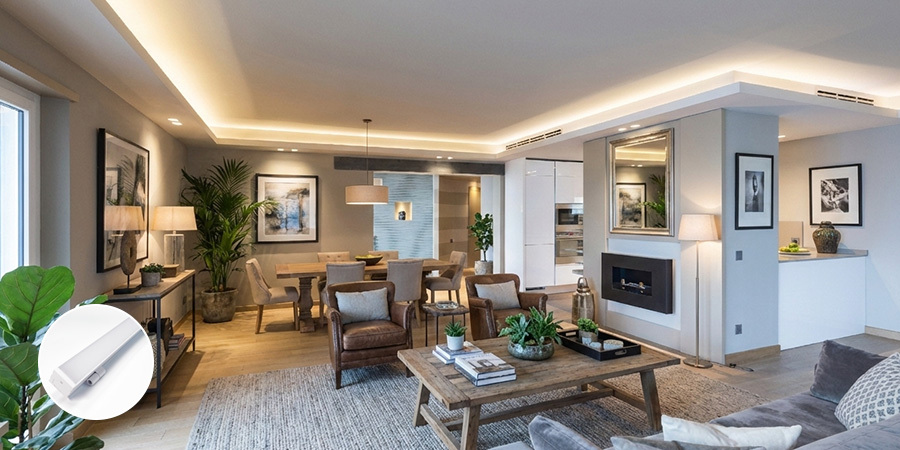
Endeavor™ was specifically designed for extended cove applications. It offers multiple CCTs to match your lighting goals and features adjustable positioning, allowing you to fine-tune the beam angle depending on the depth and shape of your cove for optimal distribution.
3. Complete Your Look with Layers of Light
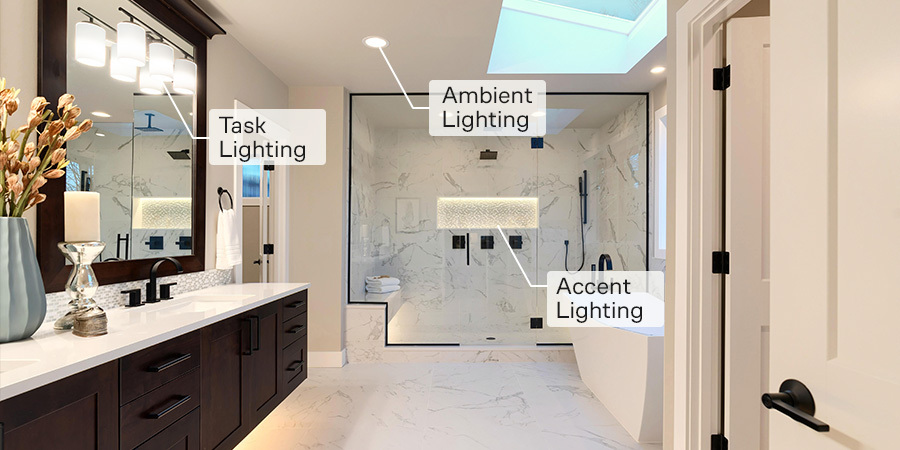
Remember, your ambient lighting plan—from fixture placement to brightness and color temperature—should fit naturally within your overall home design. It sets the foundation for how the space feels, but it doesn’t stand alone. Ambient LEDs work together with task lighting and accent lights to create a balanced, three-layer LED illumination environment.
Flexfire: In the Business of Better Ambience
At our company, we specialize in designing all three layers of light in your rooms, with a strong eye for design and attention to detail. And we approach our service the same way. Just as your space relies on ambient lighting as its foundation, our service is built on 100% high-quality products and real, expert human support.
If you need proof, just take a look at what our customers have to say about their ambient lighting projects:

Ready to improve the overall feel of your space? Our DIY Project Builder makes the process simple. Answer a few quick questions about your room, and we’ll guide you toward the right ambient lighting solution—no guesswork ahead, only brightness and comfort!