
What Is the Best Kitchen Light for Cooking?
LED CCT, levels of brightness, smart house features, and a high CRI are key for meal prep—explore which kitchen lighting helps you cook better!
- - Good lighting is vital for cooking and enjoying food.
- - Functionality is just as important as aesthetics in kitchen lighting.
- - Each stage of meal preparation requires specific lighting features to enhance the cooking experience.
- - CCT, brightness, color, and smart features let you tailor kitchen lighting to every cooking step.
We’re often told that we eat with our eyes first: The creaminess of a mac and cheese, the juicy red of a perfectly rare steak, or the freshness of a green salad are all perceived before the first bite simply by looking at them. But to truly see—and even more so, to cook and eat well—we need good lighting. What does this mean for everyday tasks in our kitchens?
Proper meal prep is about far more than peeling, chopping, or rinsing ingredients under under-cabinet task lighting. From unpacking or pulling ingredients from the pantry to how food looks when it’s served, every step of the process can benefit from the right lighting.
So whether you’re a true foodie, a passionate home cook, or the go-to host for memorable dinners with family and friends, this blog will show you how to choose and get the most out of modern LEDs—so you can cook in better light and celebrate what makes your kitchen, and your life, more enjoyable: good food.
How to Choose Lights for Kitchen Meal Prep?
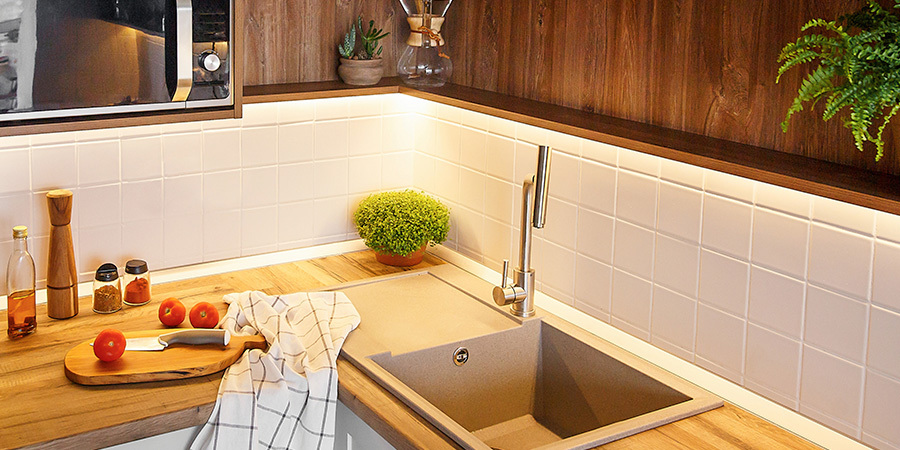
Kitchens have become a space for socializing with guests—and a place to showcase your personal style through color, decor, and finishes—so it often makes sense to choose lighting based on the year’s hottest kitchen lighting trends or the most popular decorative LED applications.
But some of us still put functionality first, with well-lit work surfaces for kneading, measuring, and plating. If we’re willing to invest in high-quality products—like great truffle oil or imported spices—why wouldn’t we do the same for such an essential “ingredient” as lighting, the one that gives us confidence while cooking and satisfaction when it’s time to eat?
To make the right choice for successful cooking, your kitchen lights need to support every goal and step that make preparing your recipe a complete and rewarding experience.
Overview: What Are the 5 P’s in Cooking?
According to chef Adam Weiner, there are five “P’s” in every dish-preparation process—and each one conveys a quality we should look for in high-quality lighting when it comes to food:
Planning: Kitchen Ambient Lighting & Simple Navigation
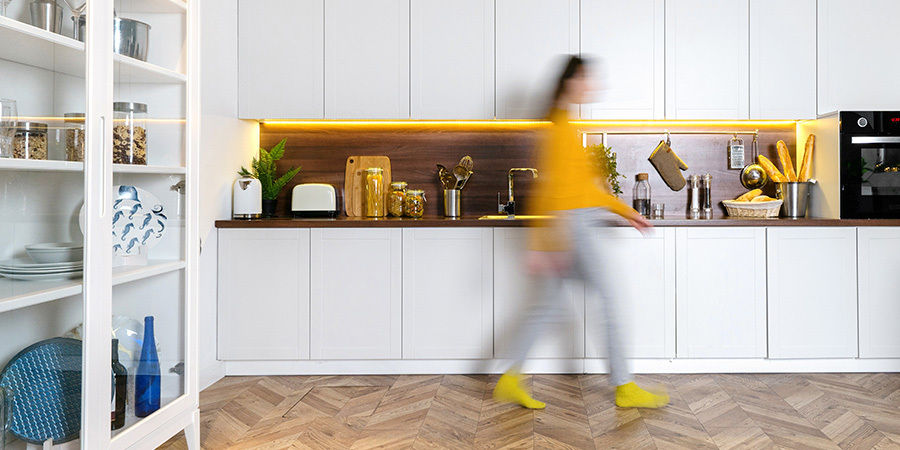
This step is about knowing which tools and ingredients we have on hand, as well as identifying our available work surfaces. In lighting terms, it means making sure our pantry, drawers, and cabinets are well lit—ideally with automatic, sensor-activated lights—and that both the countertop and the island have downlights overhead to support food prep.
Preparation: The Ideal Kitchen Task Lighting
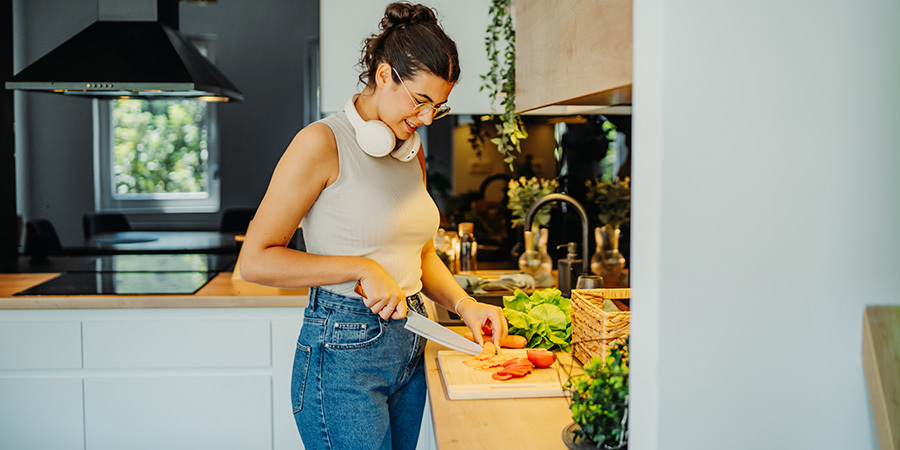
This stage of the process covers everything involved in cooking itself: washing hands and ingredients, grating vegetables, cutting juliennes, sautéing, and all the tasks we typically associate with cooking. From a lighting perspective, this mainly calls for the most common kitchen application of all—bright, energizing under-cabinet task lighting.
Presentation: From Task to Kitchen Accent Lighting
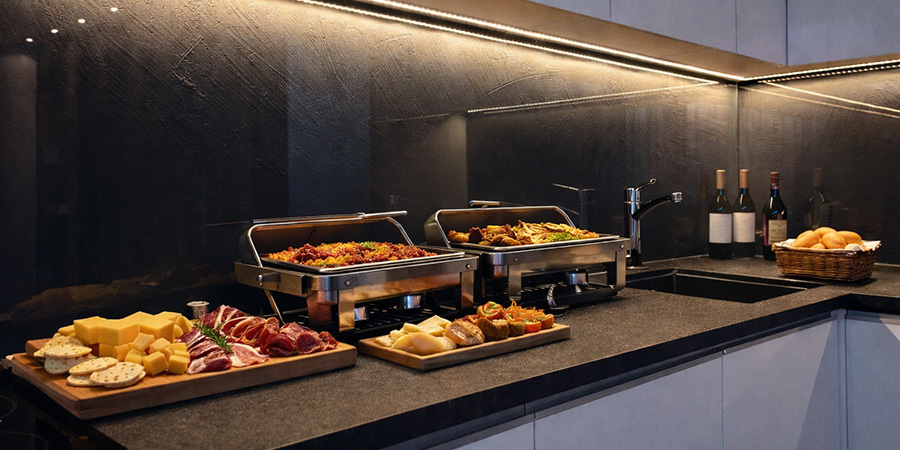
Isn’t it beautiful when, after cooking, we plate our little works of art and let them rest for a moment in the kitchen? For that, our under-cabinet lights shift into accent spotlights, using warmth to highlight the uniqueness, placement, and colors of each dish.
Pride: Your Culinary Lighted Display
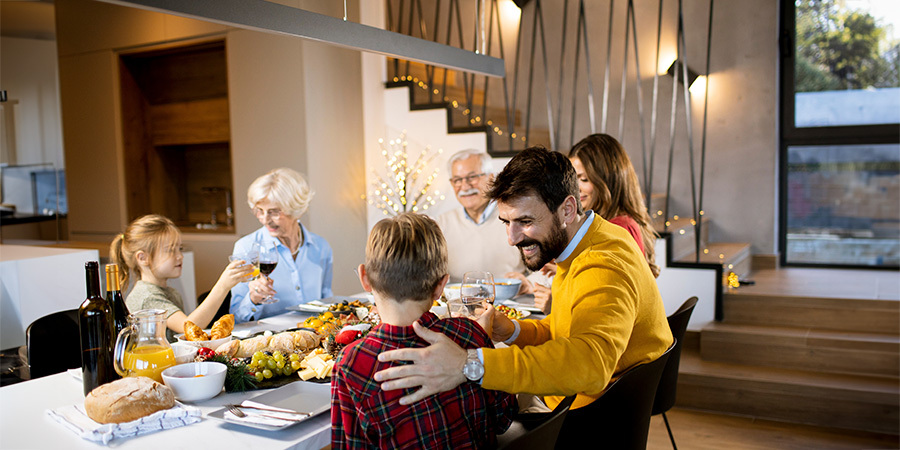
Guests are seated at the island bar, in our eat-in kitchen, or in the dining room, and take in the food set on the table alongside the cutlery and any themed decor the occasion calls for. The lighting here is similar to the previous step, but it often goes beyond focused illumination on the dishes (like pendant lights) and extends to the space's ambient lighting.
Passion: Mood Lighting After a Great Meal

Everyone has eaten and is full and happy; there may still be room for a digestif or dessert, accompanied by laughter and good conversation. What really matters here is cozy mood lighting, designed to create a pleasant, relaxed atmosphere that encourages calm and comfortable digestion.
To support all these moments and stages of preparing and enjoying food, it’s essential to carefully balance the different qualities that modern LED technology offers when choosing your lighting: light colors, white CCT range, brightness levels, color rendering quality, and smart home lighting features, if you have them.
While we recommend choosing the most versatile lights that offer the widest range of LED customization, below we’ll break down each key aspect so you can select your lighting based on your needs—placing emphasis on what matters most in your personal cooking experience.
Do Kitchen LED Lights Come in Different Colors?
Premium LED lights—the kind we usually look for when remodeling a kitchen or building one from scratch—often come in a wide range of colors. Some offer a single tone, either white or a fixed color, while others let you choose different colors depending on the occasion. However, just like choosing cabinet finishes or tile, this decision shouldn’t be based on personal taste alone.
What Is the Best Color Light for Cooking?
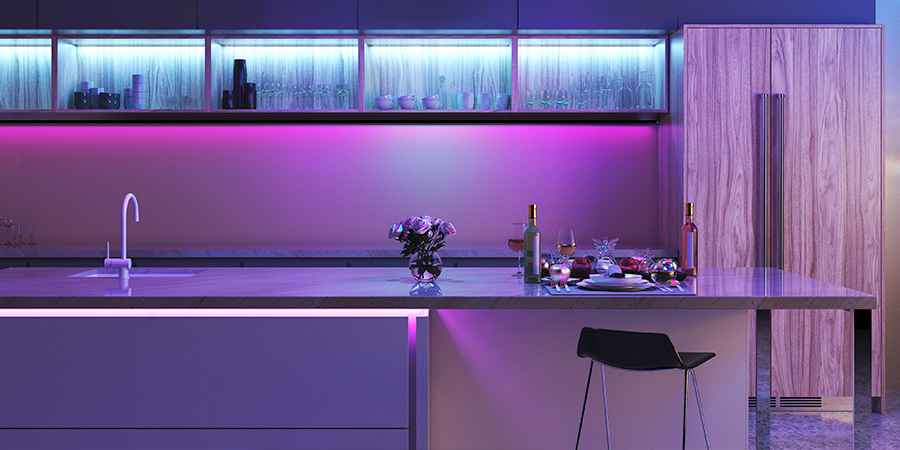
In most cases, colored kitchen lighting is best reserved for decorative, creative, or themed mood lighting. For example, if you’re hosting a dinner inspired by the LA Lakers, you might use a purple LED strip to add some flair to your kitchen island snacks. Still, over time, the most reliable and classic choice for kitchen lighting has remained white light.
On one hand, white light allows colors throughout the kitchen—from a mint-green vintage stand mixer to a handcrafted backsplash mosaic—to appear clearer and more accurate, without being distorted by optical effects. On the other hand, it’s psychologically associated with cleanliness and clarity, and it genuinely provides better visibility when it’s time to clean.
But the main reason is culinary. Recipes often involve open flames, lighters, manual or electric knives, rolling pins, peelers, graters, appliances, meat grinders, mallets, and many other potentially dangerous tools. Food also needs to be properly washed, measured, cut, and plated with precision. All of this makes white light the best option for cooking—it helps us see better and protects both the process and the people involved.
What Is the Best LED Light Color for Eating?

Colored lighting can be worth considering when it's time to eat during festive seasons or special celebrations. For instance, red, green, or amber lighting can beautifully complement a Thanksgiving or Christmas dinner. Even then, colored light usually works best as an accent layered over a base of white light in a balanced, functional way.
That’s because eating still involves practical tasks like cutting meat, serving sauces, wiping hands and mouths, or dealing with tricky foods like peas or cherry tomatoes—all situations where good visibility still matters.
At this point, knowing that white light is our main recommendation for both cooking and dining, a key question naturally appears: Which shade of white is best for each food-related moment throughout the day?
What Is CCT in Lighting?
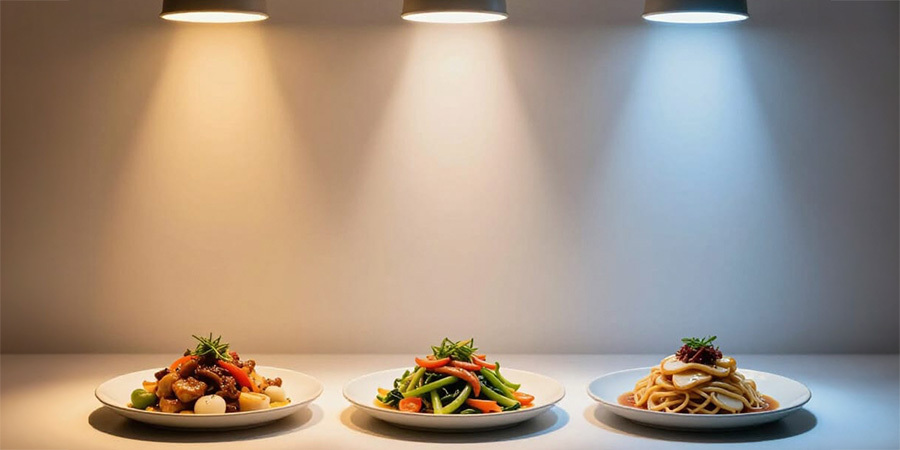
When we talk about the shade of white in LED lighting, we’re referring to correlated color temperature (CCT). Measured in degrees Kelvin, it spans from warm, yellowish tones to cooler, brighter, bluish whites. This range plays an important role in many kitchen tasks, especially those involving cooking and food.
Generally speaking, cool white light, which sits at 3500K and above on the CCT scale, is best suited for cooking-related tasks and everything involving the stove, utensils, precise plating, and cleaning. Warm white light, found at 3500K and below, works better once cooking is done: for letting dishes rest, serving, and enjoying meals, while making food look more appealing to guests and evoking emotional responses and appetite.
For this reason, we always recommend choosing tunable lighting for kitchens and food-focused spaces—such as dining rooms, breakfast nooks, and even outdoor bars and grills—that can shift between white tones and meet both goals. That said, understanding the specifics of each CCT can help you fine-tune the lighting for your space and your meals.
Is 2700K Too Warm for a Kitchen?

More commonly associated with rest and bedroom lighting, this CCT is ideal for very intimate, social dinner moments. Think enjoying a meal as a couple under soft Valentine’s Day lighting, or a relaxed, youthful, laid-back gathering where dishes are spread across the island and countertops for a help-yourself setup, with the light doubling as mood lighting.
That said, we don’t recommend this tone for cooking, nor is it our first warm-white choice for illuminating food.
Is 3000K or 4000K Better for the Kitchen?
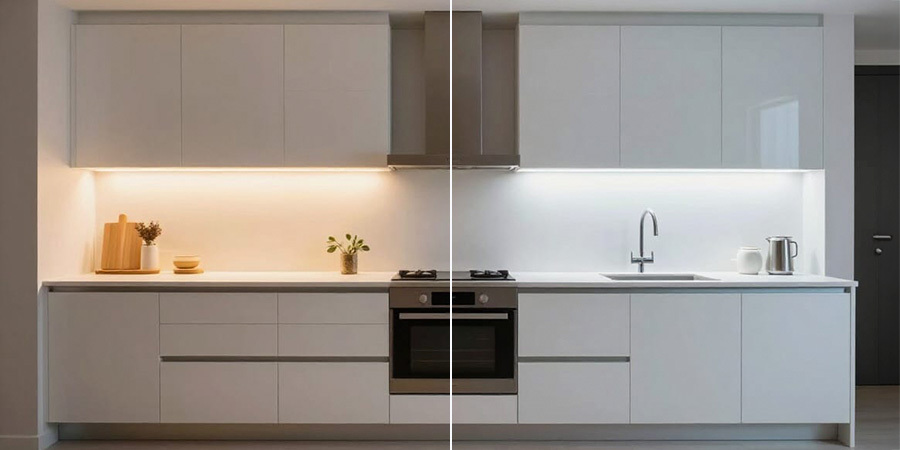
For most kitchens, 3000K is the "sweet spot" because it feels the most natural for a living space. It has a soft, golden glow that makes food look appetizing, and skin tones look healthy—essential for a dinner party.
However, if you do serious knife work or detailed decorating, you might find 4000K better for kitchen work. It’s a neutral, clean white that helps you distinguish a dark green leaf from a bruised one. A great real-life compromise is sticking to 4000K for under-cabinet lights (the work zone) and 3000K for your overhead pendants (the socializing/eating zone).
Is 4000K or 6500K Better for Kitchens?
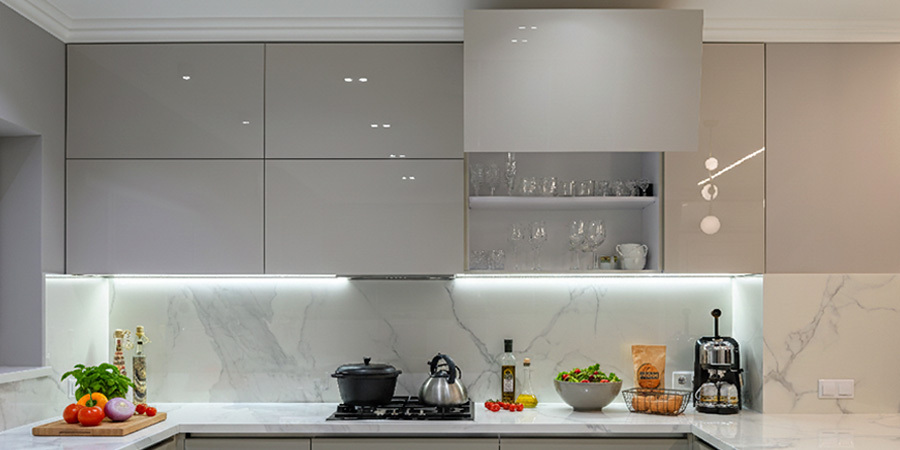
Between these two, 4000K is the hands-down winner. Lighting at 6500K is often marketed as "daylight," but in a home, it feels more like a hospital hallway or a high-security warehouse. It has a strong blue tint that can make fresh bread look grey and red meat look unappealingly purple.
While 4000K provides a bright, energizing environment that’s great for reading recipes and seeing what you’re doing, 6500K is simply too clinical for a place where you want to relax. If you try to "enjoy a meal" under 6500K, you'll likely feel a subconscious urge to finish quickly and leave the room. It’s just not built for comfort!
What is the Brightness of a Light Called?

Most of us tend to confuse the measurement that indicates how much energy a fixture consumes—watts (W)—with what actually determines brightness. In a kitchen, this confusion is even more common, since nearly all the appliances we use are defined by their wattage. In reality, however, brightness is measured in lumens, not watts.
Think of lumens as the actual "amount" of light pouring out of a bulb, sconce, or LED strip, calculated by measuring the total visible light emitted in all directions. In a kitchen, this is the difference between having enough light to safely dice a jalapeño and accidentally working in your own shadow because your overheads are too dim to reach the counter.
What Is the Best Lumens for Kitchen Lights?
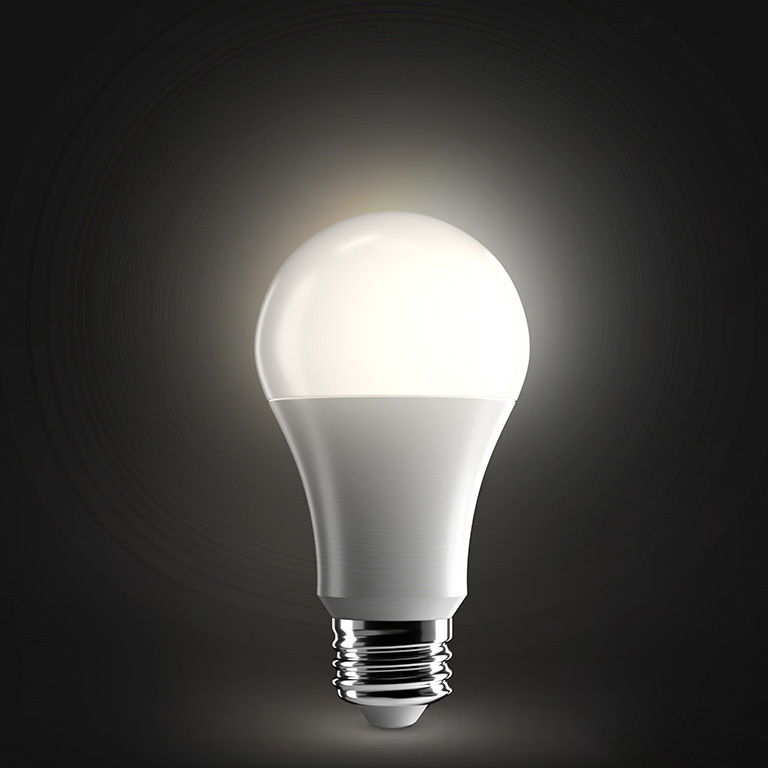
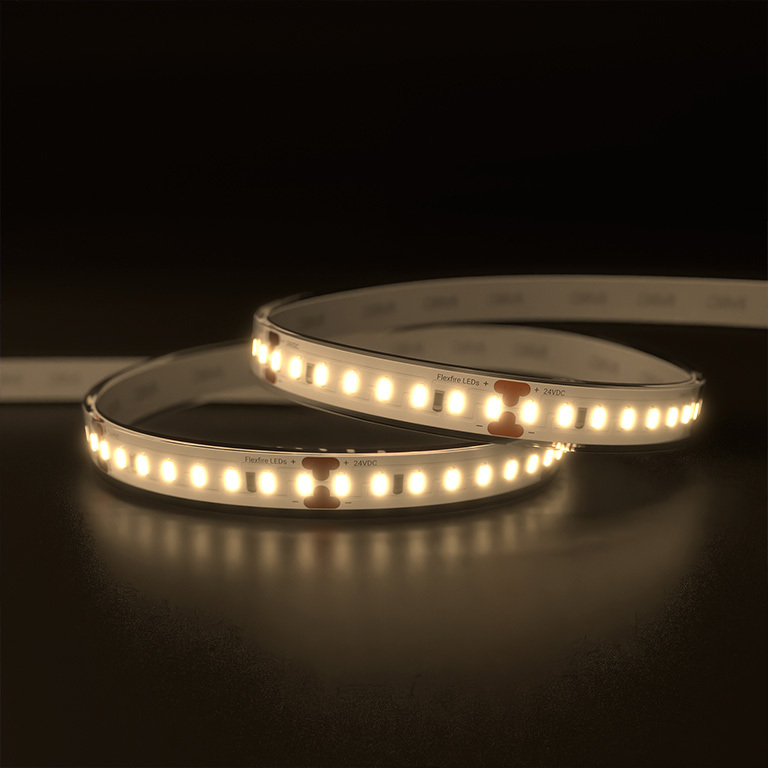
For the actual cooking and prep work, you want your kitchen to be bright and high-energy. A good rule of thumb is to aim for about 700 to 800 lumens per bulb for your primary overhead lights, and if you have under-cabinet LEDs, make sure they're punchy or task-lighting-approved strip lights to eliminate shadows on your cutting board.
This level of brightness keeps you alert and lets you see the texture of the food you’re searing or the fine print on a spice jar.
After cooking, you’ll want to lower that intensity significantly. Eating under high task lighting can feel a bit like sitting inside a 24-hour McDonald’s. If you have dimmers, lowering the fixtures to around 200–300 lumens creates a much softer, restaurant-style atmosphere. It’s adequate light to see your plate and your guests, but low enough to help everyone relax and let the kitchen’s “heavy lifting” fade into the background.
What Does CRI Mean in Lighting?
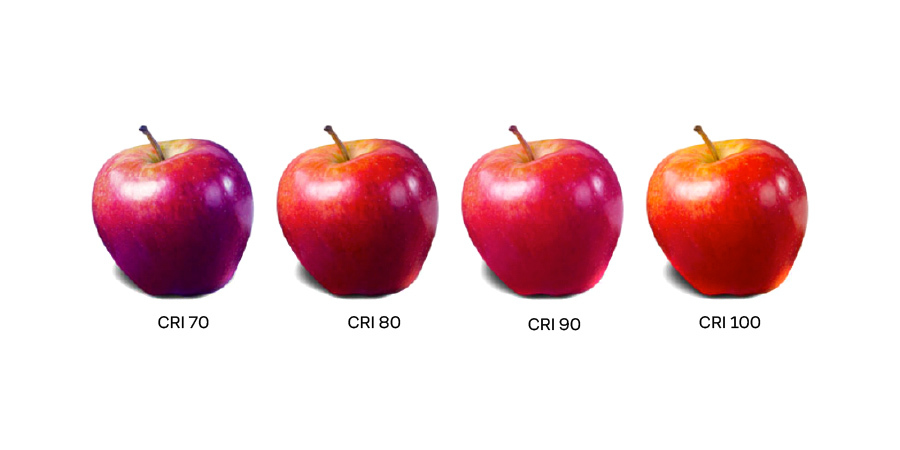
Another key LED aspect to consider when installing lights is CRI, or Color Rendering Index. There are many textures—think the rough weave of wicker pendant shades or the rough skin of a potato—and colors—from brass or gold cabinet hardware to the full rainbow range of fruits—in your kitchen, so this really matters. The closer the CRI is to 100, the better.
What is the Difference Between 80 CRI vs 90 CRI?
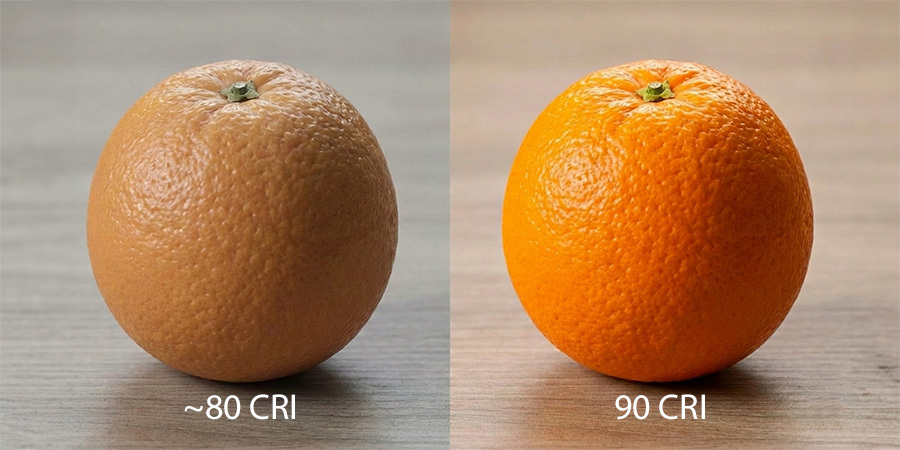
A high CRI (90 and above) lets you fully appreciate how good food looks when it’s time to eat; who hasn’t drooled over the contrast between bright red marinara and golden pasta before taking the first bite? It also enhances contrasts with tableware, like a mostly white sushi plate set on a black dish. Just as importantly, high CRI helps when cooking: it makes it easier to spot blemishes on produce, or to notice signs like bleeding in chicken that indicate it’s still raw.
Low CRI (closer to 80), on the other hand, acts like a muddy filter on real life. It can make a fresh, vibrant salad look like a bowl of dull gray weeds—or worse, lead to a true kitchen catastrophe, where you can’t tell the difference between a perfectly golden pie crust and a burnt one until you smell the smoke.
How Do You Use Kitchen Smart Lights for Cooking?

Many people assume that modernizing the way they cook—and stepping into a more futuristic kitchen—only means investing in intelligent appliances covered in screens. In reality, a more subtle (and often more impactful) upgrade is smart lighting. With a modern, robust, and easy-to-use smart home lighting system, your lights can become a true sous-chef in the kitchen.
Here are some of the key benefits of smart lighting in the kitchen, and how it can improve your meal prep routine:
- Adjust lighting for each cooking stage: Shift from bright, cool white for prep to warmer, softer tones for serving and eating.
- Change lights hands-free while cooking: Use voice control to adjust lighting when your hands are busy chopping, stirring, or cleaning.
- Light each kitchen task separately: Control prep counters, islands, and dining areas independently so every cooking step has the right light.
- Signal when food is ready: Let the lights announce mealtime subtly—no kitchen yelling required.
- Stay on time while you cook: Use lighting cues or timers that change automatically during prep, cooking, and cleanup.
- Sync lighting with new appliances: Connect lights to smart ovens or plugs so they respond to when you’re cooking, baking, or brewing.
Easy LED Lights: A Must-Have for Your DIY Cooking Kits
High-quality LED lighting is, without a doubt, a key ingredient in every recipe, just as essential as good food. That’s why it needs to be easy to use, so it enhances your cooking instead of complicating it.
With that in mind, Flexfire offers two simple ways to bring cooking-optimized LED strip lighting into your kitchen. On one hand, we offer all-in-one DIY LED kits with everything you need for kitchen installations, dining rooms, and other food-focused spaces. On the other hand, our Project Builder asks a few quick questions about your kitchen and cooking needs, then delivers a ready-to-go cart reviewed by an expert—in just minutes. It really is that easy.
So what are you waiting for? Make every cooking session simpler, clearer, and—above all—brighter. We may eat with our eyes first, but we cook with them too. Start your kitchen LED project today!