
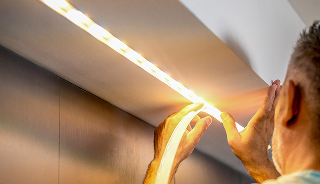



What Is the Best Light for Reading? 6 Task Light Must-Haves
Looking for World Book Day ideas? Learn about LED reading lights and discover the best way to read a book with better comfort and clarity.
- -Our homes are full of reading nooks—some we don’t even realize we have—and each one is an opportunity to be enhanced with quality LED lighting.
- -Good lighting is essential for comfortable reading, as it significantly reduces eye strain and enhances focus. It’s also important to care for your books.
- -White light is the best choice for reading, as it provides high contrast and minimizes visual fatigue compared to colored lights.
- -When choosing the right reading setup, key lighting specs to consider include CRI, light direction, and brightness level, among others.
Imagine an ordinary day at home, and you’ll notice something: You’re almost always reading. If not a book, then something else. From everyday bits like a flyer you picked up at the mall or your electricity bill to the latest autobiography of a First Lady on your e-reader, you’re always reading something.
And more than that, you’re reading everywhere: in the kitchen, in the living room, in the bedroom, and even in the bathroom!
So if our houses are low-key, everyday reading hubs, there’s one essential ingredient we can’t overlook: good lighting. Of course, other factors matter too, like a quiet, comfortable chair or bed, good eyesight, or the right prescription glasses. But without proper reading lighting conditions, it’s easy for something so simple to become unnecessarily frustrating.
That’s why, in this blog, we invite you to explore the best lighting settings to look for in an LED light to support better reading. We’ll also share six of the best task lighting options to help you get there—just in time for World Book Day!
Which Lighting Settings Make the Best Reading Lamps?
It may seem obvious what you should expect from your lighting to read comfortably in the living room or bedroom. Brightness is probably the first thing that comes to mind. “Don’t read in the dark, you’ll go blind!” is something many of us heard growing up, usually while sneaking in a few more pages of a Marvel comic or flipping through a video game booklet late at night.
Even though brightness does matter, it’s not the whole story. There are other key features that, along with it, turn a fixture or bulb into the ultimate reading task light—that is, one designed to help you focus on specific activities like writing, PC work, and, you guessed it, reading. Here are the key qualities to look for when choosing the right LED light to read:
White Light (& No Colors!)

When it comes to reading, this one is non-negotiable. The color of the light you choose should be white, unless your kids are playing with a toy spy kit and need UV light to reveal invisible ink. White lighting products create a strong contrast between black text and white paper, reducing the effort your brain needs to recognize shapes and making reading smoother and more comfortable.
Using other colors—like those from single-color or color-changing lights—can lead to a range of visual and physiological drawbacks:
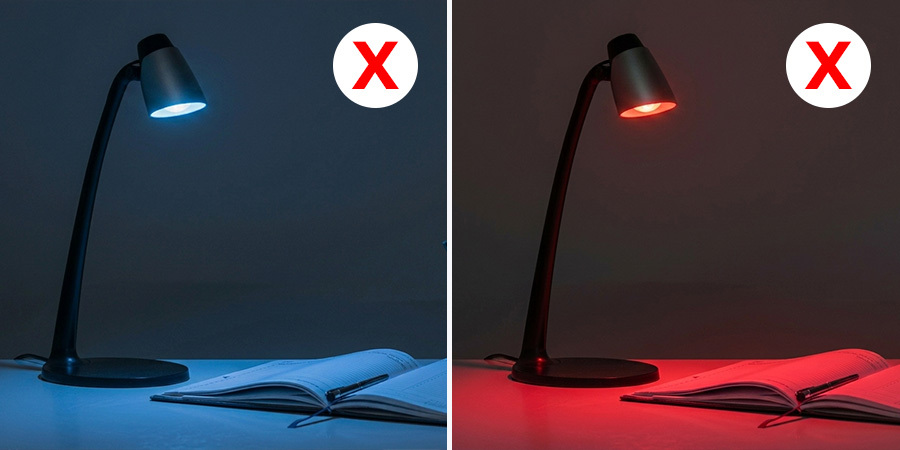
- Red Light: While it helps preserve night vision (like in old-school darkrooms), red light offers very low contrast. Text can appear soft or “fuzzy,” forcing your eyes to work harder and leading to quicker fatigue.
- Blue Light: Although it provides high contrast, blue light suppresses melatonin production and can cause noticeable chromatic aberration: a scattering effect in your eye that makes text appear to have a slight glowing or vibrating halo.
- Yellow or Deep Amber Light: If the light is too saturated or monochromatic, it can wash out the page. White paper may start to blend with highlights or colored ink, making it harder to distinguish details, especially in diagrams.
- Green or Magenta Light: These create strong color distortion, confusing your eye’s photoreceptors and sometimes causing a “ghosting” effect or temporary after-images once you look away from the page.
For clear, comfortable, and consistent reading, white light remains the best choice. Every time.
800 Lumens or 500 Lumens per Square Foot

What are lumens? That’s how we measure your LED strips’ or fixtures’ brightness today, and they’re key to avoiding eye strain! For reading, you want enough light to clearly illuminate the page without glare—typically around 400–800 lumens if yours is a dedicated reading light or lamp, or around 500 lumens per foot if yours is an architectural LED strip linear wash.
Think of sitting in your living room recliner after work, reading the newspaper: If the light is too dim, you’ll squint and lean in; too bright, and you’ll feel overwhelmed and might develop a headache. The right brightness lets your eyes relax and focus naturally.
3500K Light for Cozy Reads or 5000K Light for Deep Focus
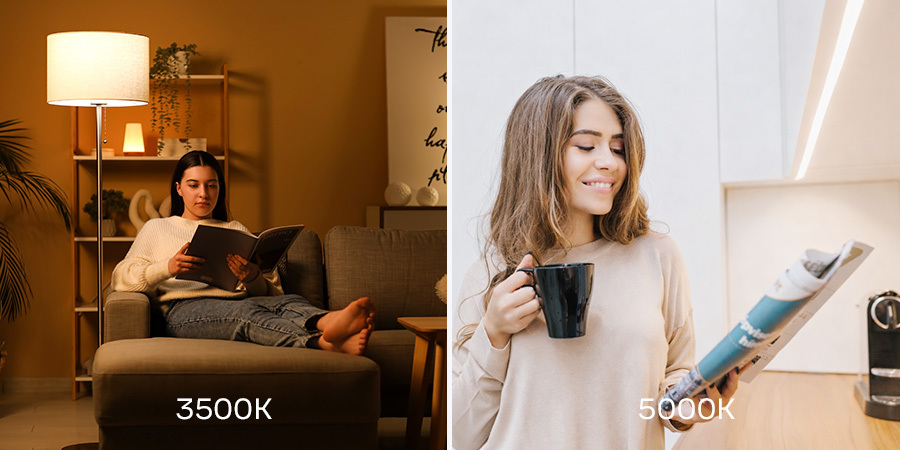
The correlated color temperature (CCT) of your white reading light—the specific shade of white you choose—should depend entirely on the moment and the type of material you’re reading. After all, it’s not the same to sit in the living room with your family while going through complex medical results, where you need maximum clarity and focus, as it is to lie back in a hammock at a country house, casually reading a Twilight novel on vacation.
If your reading material is dense, serious, or something you need to study or memorize, opt for cooler light—around 5000K or higher. This is especially helpful for those working from home or anyone whose job involves a lot of reading, like teachers grading papers at night or cooks carefully following recipes in their own kitchen. Cooler light promotes alertness and enhances visual clarity, helping you stay focused for longer periods.
On the other hand, if what you’re reading is light, leisurely, or part of your wind-down routine, a more neutral tone—around 3500K—is ideal. It’s warm enough to feel comfortable, yet cool enough to keep you engaged. We don’t recommend going much warmer than that for reading. Imagine lying in bed with a gripping mystery novel: If the light is too warm (like 2700K), it may make you feel sleepy too quickly, cutting your reading time short.
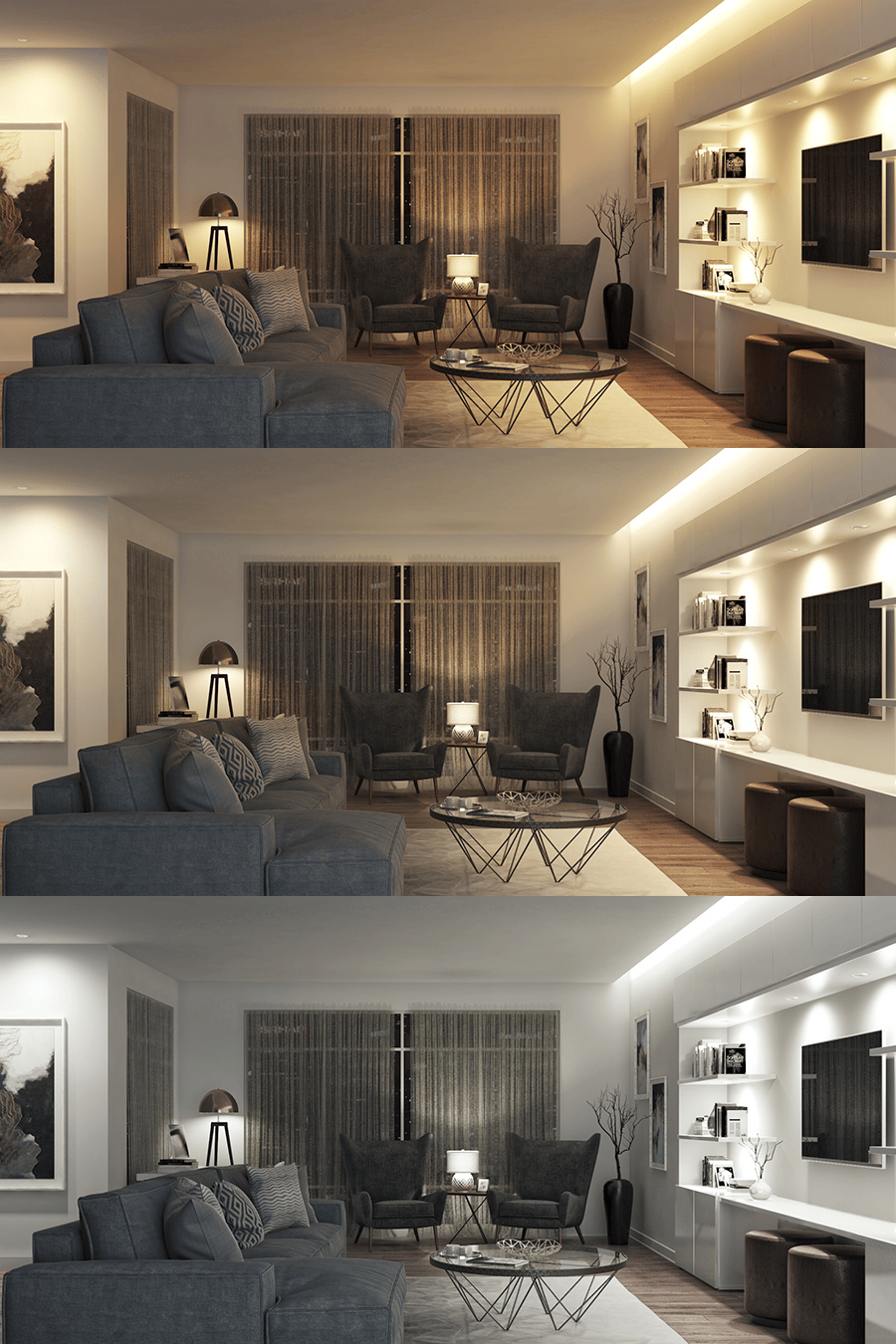
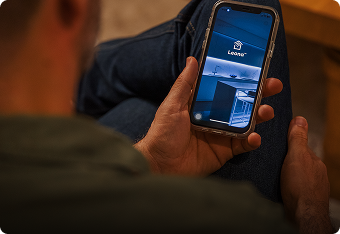
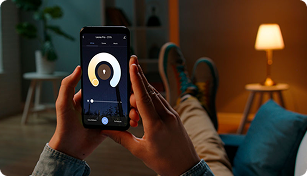
A CCT approach we recommend is to use tunable white lighting in each of your regular reading spots: by the bed or living room sofa, under kitchen cabinets, or above the island. With a smart home lighting app or a wall dimmer, you can easily switch from cool to warm light at a moment’s notice. After all, both deep focus and relaxed reading can happen anywhere at home.
High Color Rendering Index (CRI)
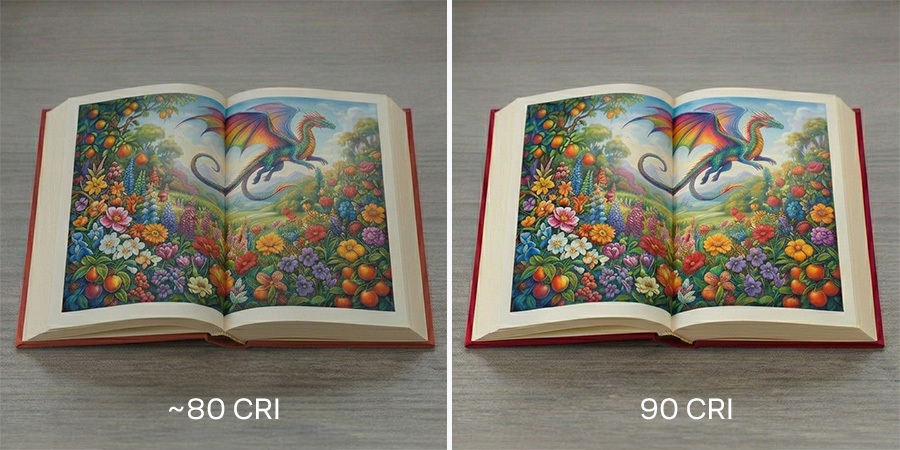
CRI tells you how accurately a light source reveals colors compared to natural daylight. For reading, aim for a CRI of 90 or higher so text looks crisp and true, and images don’t appear plain and dull. With high-CRI lighting, everything appears more natural and easier to process, making long reading sessions more comfortable.
Imagine you’re flipping through a richly illustrated kids’ book at bedtime or a lavish cookbook as you prepare your favorite pasta—your kids wouldn’t want to see a faded Woody and Buzz on their adventures, and you definitely don’t want a dull, orangey version of a vibrant Neapolitan sauce! That’s exactly what happens under low-CRI lighting: colors appear flat and slightly off, making images less engaging and forcing your eyes to work harder over time.
Page-Oriented Light Direction
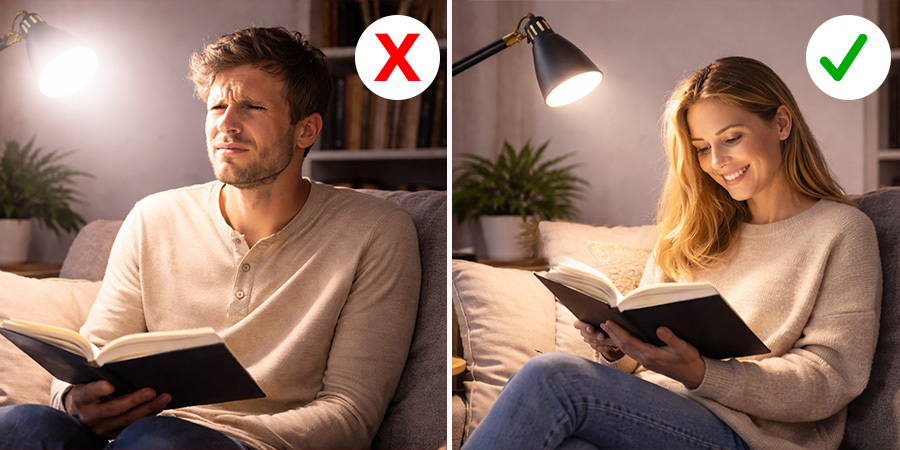
Direction refers to where the light is coming from relative to your eyes and your book. The best setup directs light onto the page, not into your eyes. For instance, if you’re reading a magazine in your study with a poorly positioned lamp, you might catch glare every time you shift. A well-directed light—like a wall-mounted or adjustable reading lamp—keeps the beam focused on the book, reducing strain and improving clarity.
Direct vs Indirect Lighting
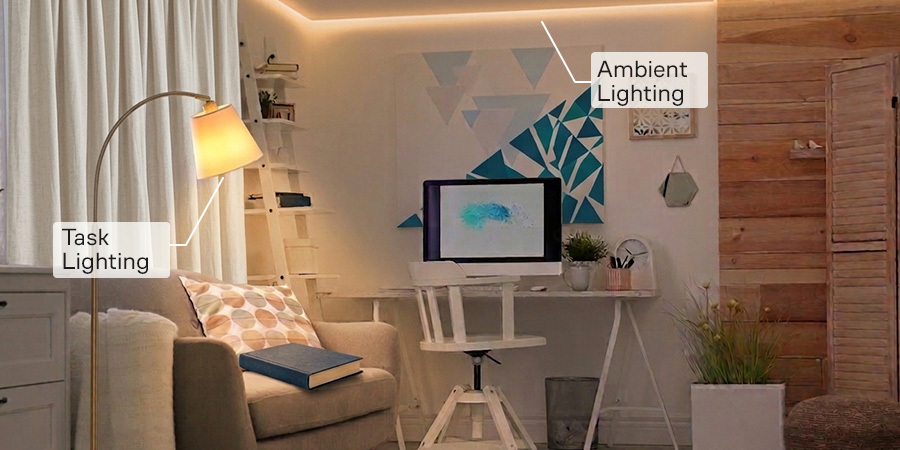
Direct lighting shines straight onto your reading material, while indirect lighting bounces off walls or ceilings to create a softer, overall glow. For reading, a combination of both often works best.
Picture a cozy evening in your pergola: A direct task lamp illuminates your book as you relax on a wicker sofa, while indirect cove and under-sofa lighting softly fills the space, reducing contrast and making it easier to read outdoors after dark. This balance between task and ambient lights keeps your eyes from constantly adjusting between bright and dim areas—especially important outside—resulting in a more comfortable and enjoyable spring or summer reading experience.
The 6 Best Reading Lights & Applications for Your Home
When it comes to reading, some nooks are obvious and others not so much. Certain spots, like the dining table, serve a primary purpose but often double as reading areas; others, like a home office desk, are designed with that intention in mind. The truth is, any place with a surface to rest a book or reading device—or, simply, comfortable enough to use your lap or pull in a small side table, like a sofa or even the toilet—can become the perfect reading spot.
And thanks to the variety and flexibility of LED lighting, especially compact solutions like LED strips, it’s now possible to effectively light just about all of them. Here are six of homeowners’ favorite LED lighting applications and solutions for reading:
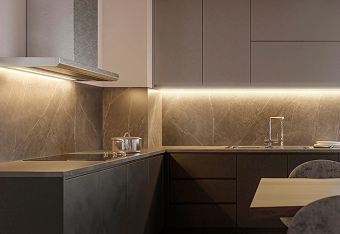
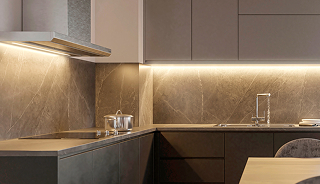
1. Lighting Under Kitchen Cabinets Using LED Light Bars
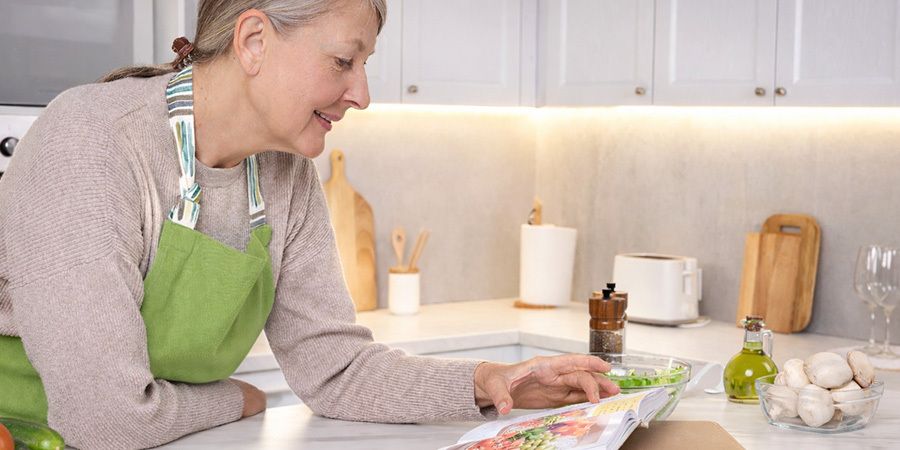
Many people assume that under-cabinet lighting in the kitchen is mainly there to prevent cuts while handling knives, measure ingredients accurately, or safely manage hot cookware. And they’re not wrong!
But it’s easy to overlook another essential part of cooking: reading. From recipe books (both text and images) to step-by-step instructions on a website, product labels, expiration dates, and even manuals for new kitchen tools—reading is constant in the kitchen.
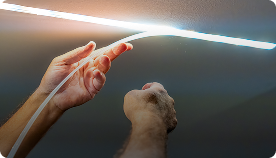
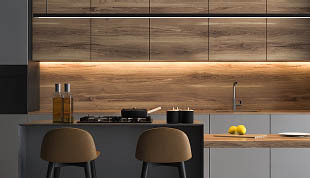
A perfect solution for illuminating your countertops and making all this culinary reading easier is tunable white LED light bars. With strong, architectural-grade brightness and the ability to shift kitchen CCTs—between neutral or cooler whites for prep and reading, and warmer tones for plating and serving—this setup is incredibly versatile.
Even better, when paired with light bar accessories like hands-free sensors, you can turn the lights on without touching a switch, so you’ll never smudge your grandmother’s handwritten recipe book while baking a cake.
2. Adjustable Desk Lamps for Home Offices
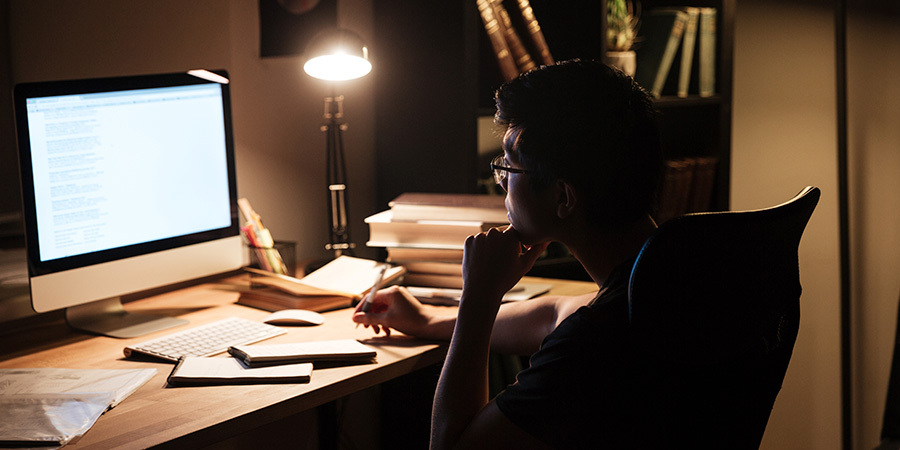
You’re at your desk at 9 PM, reviewing emails or studying for next week’s final exam. The cool-white lamp over your desk is angled slightly from the side, evenly lighting your book without glare or casting a shadow of your head. You stay alert, focused, and comfortable for hours, prolonging your productivity well into the predawn hours.
This is the gold standard for focused reading—especially when you need clarity and concentration during back-to-school or heavy-workload seasons. The adjustable arm of a dedicated desk spotlight lamp, along with its multiple brightness levels, let you control both angle and intensity, which are key for longer reading sessions, better content assimilation, and even note-taking on the side.
3. Recessed LED Lighting Under DIY Floating Shelves
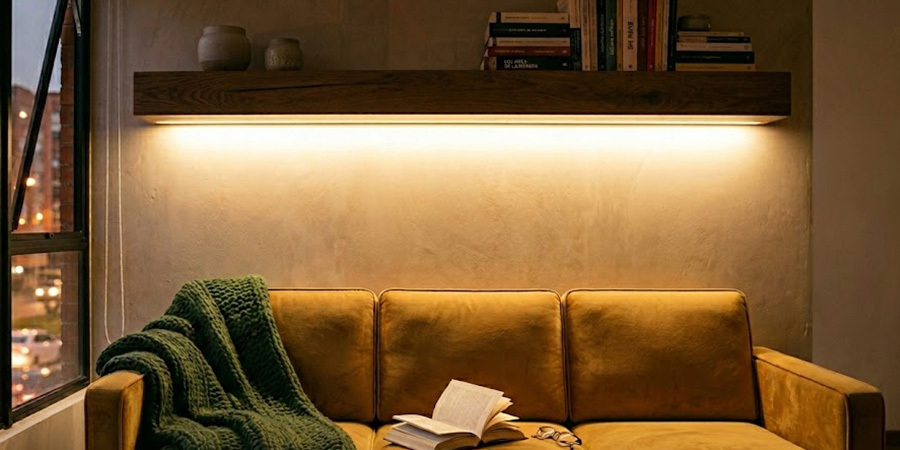
In many homes, especially students’, there may not be much furniture, but a good sofa is key. The dining table may also be too small, there may be no desk, or work surfaces may simply be buried under clutter; still, that’s no reason to stop reading. For many, the sofa becomes the go-to spot—sitting or stretched out, blanket on, fully immersed in a book.
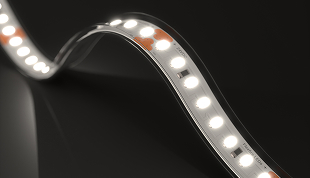
In these minimalist setups, a simple DIY solution can make all the difference: a floating shelf that holds everyday items (books, collectibles, even trophies…) while doubling as a lighting feature. Installed underneath, an LED strip within a recessed aluminum channel can cast a clean, even wash of light over the sofa. Bright enough for reading, yet dimmable for more relaxed moments or movie nights, it’s a sleek, space-saving way to turn any couch into a fully functional book nook.
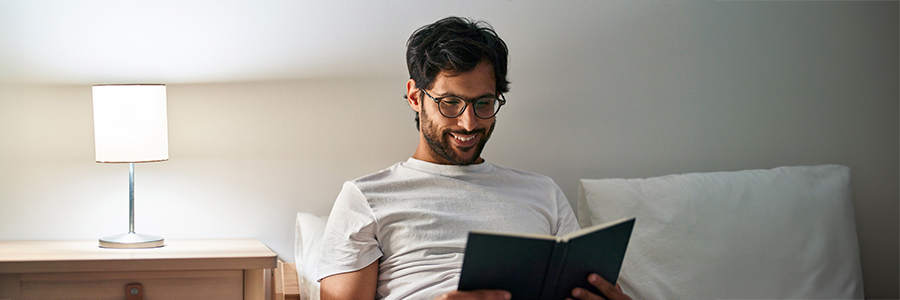
4. Wall-Mounted Bedside Lights or Headboard Lighting
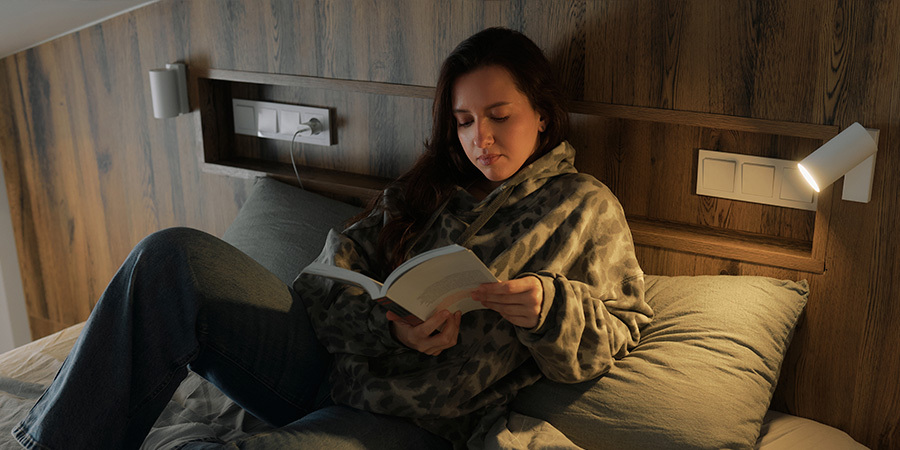
Recent studies on bed routines suggest that reading at night can help you fall asleep more easily—even more effectively than some chemical or medical aids—and that people who maintain this habit report getting up to 25 extra minutes of sleep. Because reading pulls us away from screens and their disruptive blue light, many of us turn to it as the ideal way to wind down and ease into the most anticipated moment of the day: sleep.
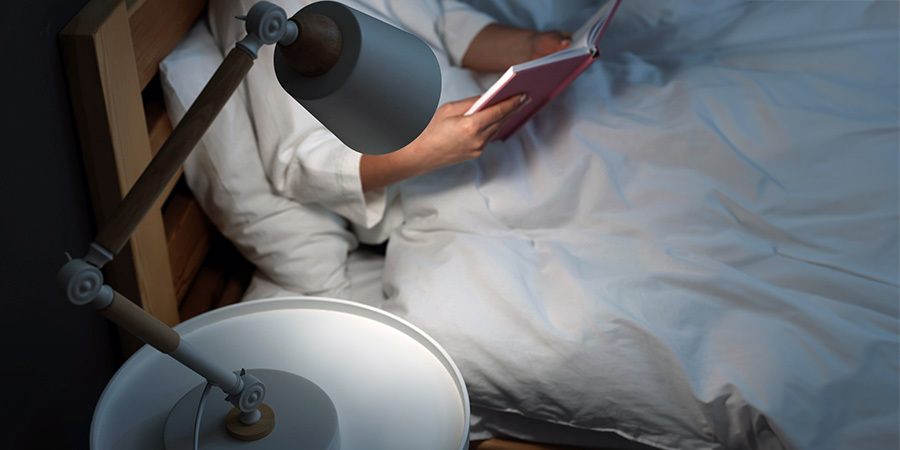
For this setting, we recommend two lighting options that are gentle on the eyes and blend seamlessly into a well-designed bedroom. The first is a set of wall sconces or small clip-on lamps attached to the headboard that direct light precisely onto your book.
The second is an indirect lighting setup—typically LED strips placed along the sides or behind the bed—that bounces light off the wall and softly illuminates the page. Both approaches work beautifully, offering comfort, functionality, and a calm, cozy atmosphere for nighttime reading.
5. Study Floor Lamp with Bright White Smart Bulb
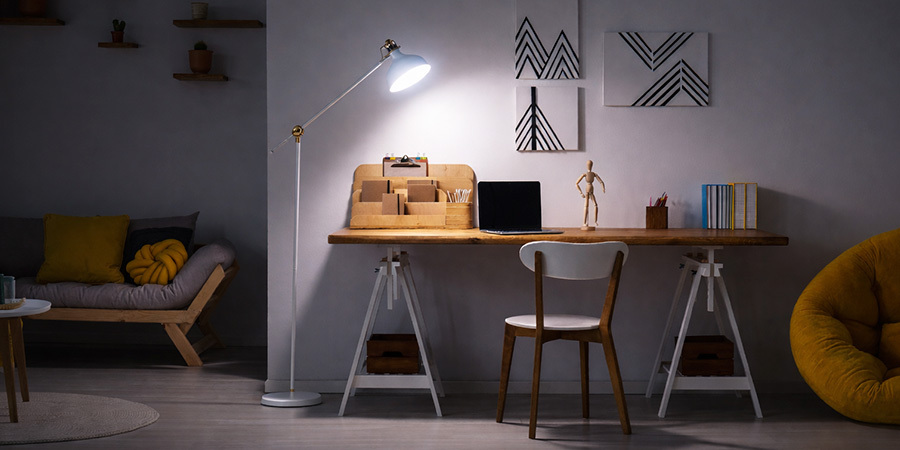
We all have a favorite armchair—usually a bit worn, but incredibly comfortable—next to which we like to keep a small side table with whatever we’re currently reading, a cozy blanket, a pair of slippers, and, if we’re lucky, a footrest. It’s often by a fireplace, tucked into the TV room, a study, a living area, or sometimes in a quiet corner of the bedroom.
For this kind of dedicated reading spot, a floor lamp is your best ally. Whether it has a long arched arm or a more focused, spotlight-style head (depending on how modern the design is), it should direct light straight onto your book and allow for easy adjustment. Add a smart white LED bulb, and you can switch between different shades of white depending on what you’re reading, whether it’s a work report for the next day or your parents’ love letters.
6. Clip-On Book Lights for Reading Anywhere
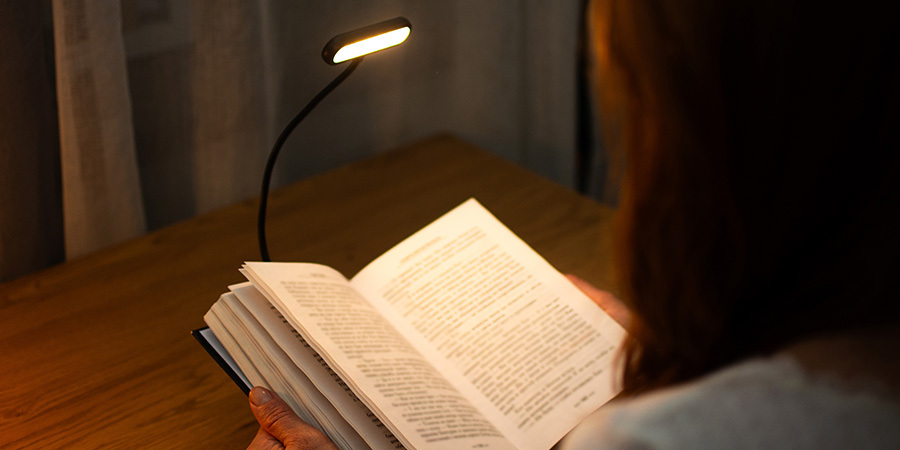
There are moments at home, when we’re not alone, we can’t—or simply don’t want to—turn on the lights the way we’d like just to fully enjoy that thriller we can’t put down. Think of your partner sleeping next to you, or your family watching a movie in the same room.
Or sometimes a book is so good you want to take it everywhere, even outside the house, whether it’s to read in a doctor’s waiting room or at a train station. Wherever the book goes, a bit of home goes with it. For these situations, the best solution is a clip-on LED reading light designed specifically for books.
Compact yet wide enough to cover a full page, with a soft-grip clip that won’t damage the paper, it attaches directly to your book and illuminates only your reading space. It’s perfect when you don’t want to disturb others, when you’re reading on public transport, or when you need a little extra light in less-than-ideal conditions (ideally with a rechargeable battery for maximum convenience).
Celebrate World Book Day with Flexfire Reading Light
Before wrapping up, we want to share one more way in which proper LED lighting can influence your reading habits—and the way you care for your books (especially if you’re a collector or bookworm!). Keep these quick tips in mind to avoid damaging your books with light:
- Stick to the necessary brightness: Too much unneeded light—especially intense, concentrated beams—can accelerate wear on paper and ink. Use a well-balanced task light that’s diffused and bright enough to read comfortably, without overwhelming the page.
- Choose low-heat LED lighting: LED lights are your best option because they emit very little heat and minimal UV radiation. This helps prevent pages from drying out, warping, or becoming brittle over time.
Now that you know everything about the relationship between reading and a well-lit space to enjoy it comfortably, it’s time to start planning. Planning what? Your reading list for the rest of 2026 and the lighting projects that will make it all possible. Get in touch with us—we’re here to offer expert, by-the-book guidance on LED lighting every step of the way!