


How to Light a Living Room with a TV? 3 Accent Light Ideas
From home accents to full immersion, explore living room television ideas that go beyond the screen with TV lighting and LED backlight strip setups!
- -Proper lighting around your TV improves eye comfort, especially in low-light conditions.
- -Immersive lighting that reacts to on-screen action enhances your viewing experience beyond the screen.
- -Subtle, decorative backlighting integrates the TV into your space, keeping the room cohesive even when it's off.
For many of us, a living room TV has been the norm for years. We wanted a way to catch up on the news after a long workday or to share a space with our family—beyond our individual rooms—to watch movies together. Whether it was playing music videos at parties or simply providing background noise while cleaning, the TV was just another utility.
That has all changed. As we expect more from our home appliances, we now want that screen on the wall to do more than just display content. There may be no better way to achieve that without costly renovations to your space than through illumination.
With the right backlight and entertainment center lighting techniques, you can completely transform both your living room and your viewing experience. In this blog, we'll walk you through the three most popular approaches and the key features every modern setup should include.
Why Do People Put Lights Around Their TVs?
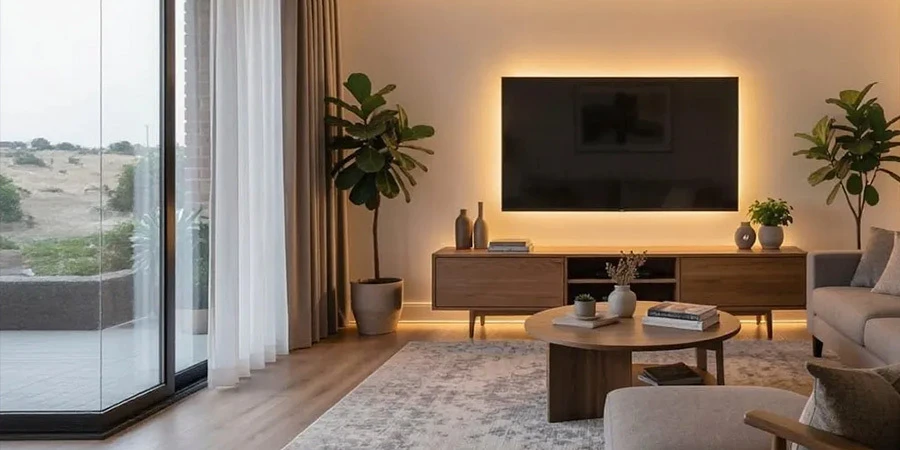
When we talk about lighting "around the TV," we're surely talking about one of the most popular living room lighting applications. Regardless, we can mean two different things. On one hand, it can refer to lighting the surrounding area—parts of the wall, nearby surfaces, or the niches and furniture around it. On the other hand, it can mean outlining the TV itself by placing lighting along the perimeter of its back panel.
Yes, that part of the TV that used to be reserved only for HDMI cables and power connections has now become a useful surface for adding LED lighting. Here's why so many people choose to do it:
Watching in Eye Comfort Mode
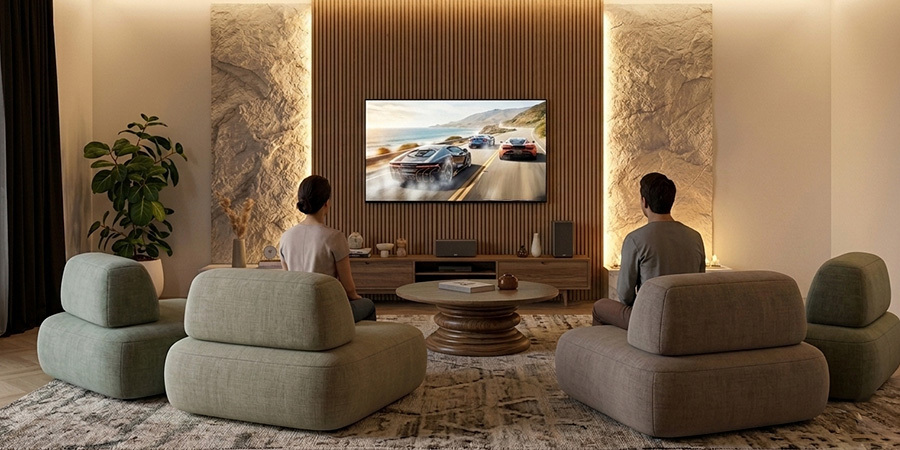
Picture this: it's a dark night. You've just made popcorn, the pizza has arrived, and you're settling in under the blankets on the couch with your partner. A horror movie or rom-com is queued up, ready to play. But you can't find the remote. You don't want to turn on the main living room lights—it'll blind you and kill the mood—but you can't see anything either. So what do you do? Reach for your phone and turn on that harsh, blinding "flashlight"?
Now imagine the opposite. It's late, and you want to keep a light on so you don't doze off mid-movie. But your floor lamp or chandelier is so bright that you end up squinting the entire time, dealing with glare on the screen, and cranking up the TV brightness just to compensate. Neither option really works.
This is where the first major reason for adding lights around your TV comes in: comfort. The right lighting setup makes your viewing experience easier on the eyes and far more enjoyable. And it matters even more if you tend to watch TV at night, after work.
While watching in low light or complete darkness isn't considered highly dangerous, ophthalmologic studies show it can lead to dryness, eye strain, and fatigue. Not to mention the occasional stumble or stubbed toe when you get up for a drink!
Enjoying Immersive TV Experiences
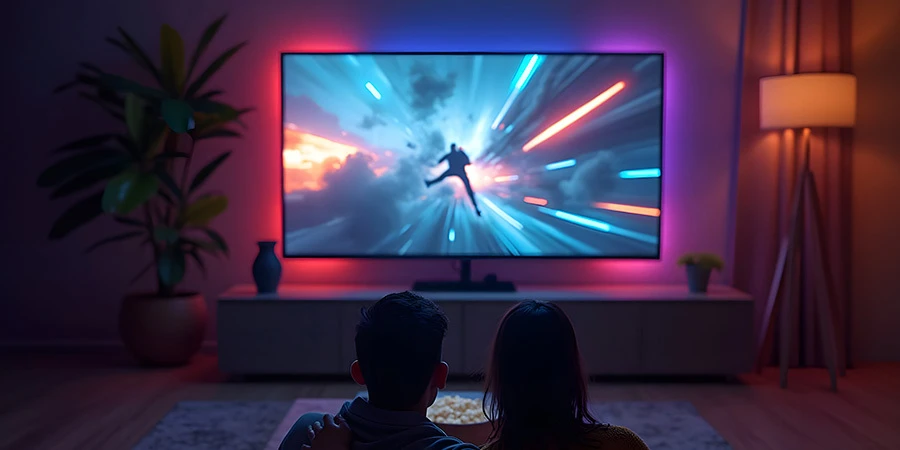
Now let's shift the scene a bit. Imagine you're still in that movie marathon night, but now you're watching the latest Tron, a new Avatar flick, or the sequel to Wicked. These are the kinds of blockbusters that impress with rich color, immersive sound, stunning effects, and cutting-edge visuals. Like most people, you'll probably tweak your TV settings to get the best possible picture.
But at some point, your monitor and sound system can only go so far. So what else can you do?
That's where the second reason for adding lighting behind your TV comes in. Today, there are lighting systems that react in real time to what's happening on screen. With the right LED setup designed for immersive viewing, you can extend the cinematic experience beyond the edges of your TV—bringing the visuals into your living room and making everything feel bigger, deeper, and more alive.
Enhancing Your Accent TV Wall
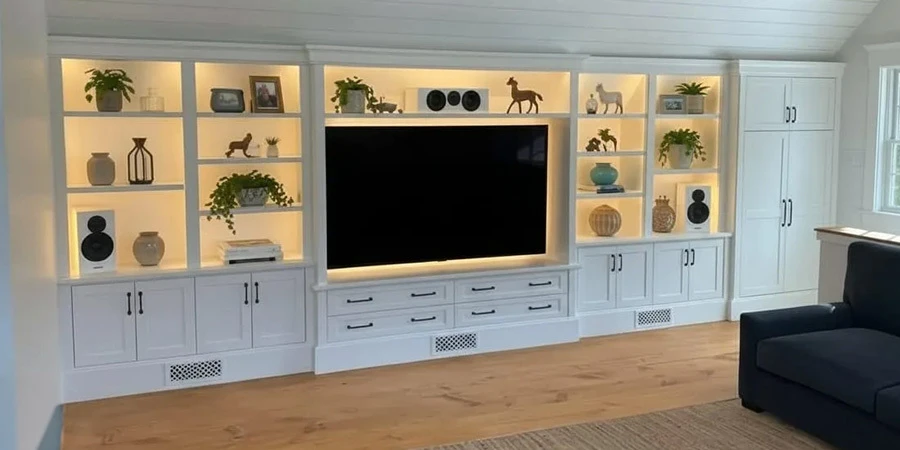
Finally, imagine the movies are over. Maybe you stay on the couch talking about what you just watched, or simply enjoying a quiet moment together. Or think of any time you're in the living room—alone, with family, or with friends—when the TV is off and you're just in the space. The colors and textures from decor, as well as other light sources, all contribute to the atmosphere.
But what about the TV? When it's not in use, that large, rigid black screen can feel out of place. It tends to absorb light and stand out in the wrong way, like a blank, lifeless rectangle among otherwise intentional design elements. So how do you give it a bit of personality? How do you bring it back into the room?
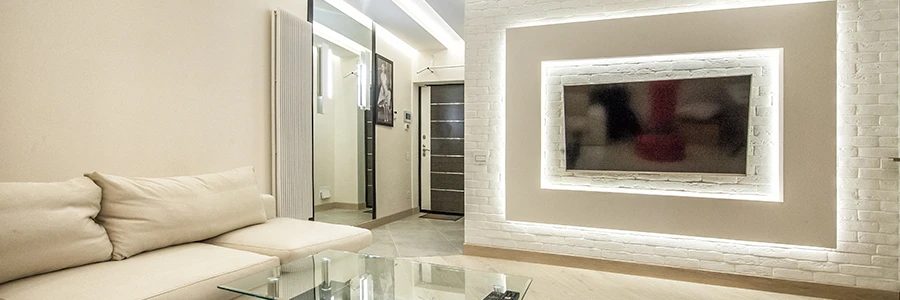
This is where the third reason comes in. By adding subtle backlighting—either directly behind the TV or around it with strategic placements on your console, built-in unit, or floating shelf—you can make the screen part of your lighting design. The result is added depth, a softer ambiance, and a living room that feels cohesive, even with the TV powered off.
What is the Best Type of Backlight for a TV?
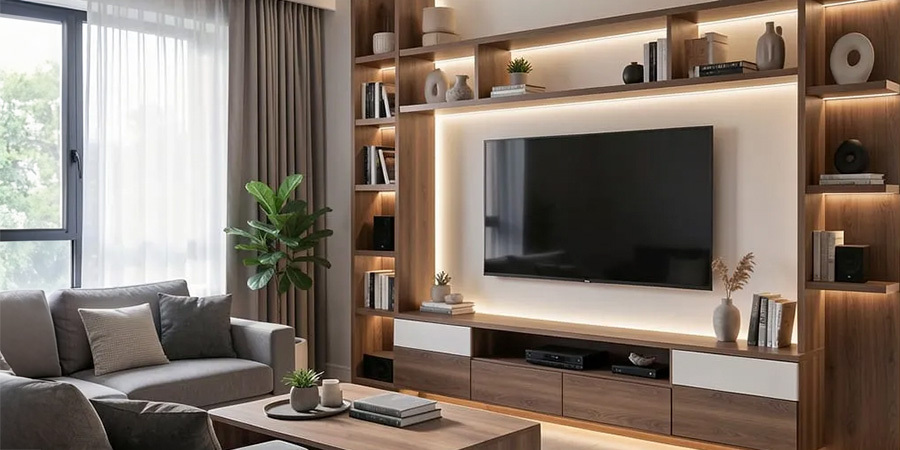
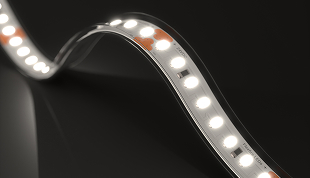
If you're looking to upgrade your TV setup without overcomplicating things, LED strips are the clear winner—in real-life living room lighting projects, not just in photos! They're ultra-thin, flexible, and easy to install right behind your TV or along the edges of your entertainment center, thanks to their adhesive backing. Since they can be cut to size, they work whether you're going for a subtle screen glow or an immersive setup across your media unit.
Because they're highly adaptable, the key is simply choosing the right type for your setup. One night you might be watching a live concert and want lighting that dances to the beat, while another evening requires a more subtle ambiance for hosting colleagues. With the right LED strip selection, your lighting adjusts to every moment while remaining sleek and out of sight.
To get the right balance, make sure the LED strip you choose features these key settings for an ideal TV backlight:
- Brightness (Keep It Subtle!): You don't want this competing with your TV. Think of it as a background accent lighting glow—around 90–130 lumens per foot is usually enough. If it feels like it's lighting the whole room, it's probably too bright.
- Indirect Lighting: The strips shouldn't be visible. You want the light bouncing off the wall behind the TV, not your eyes. That's what creates that soft halo and avoids glare.
- Color (Simple or Fun): If you just want comfort, go with white light. If you like a bit of flair—movie nights, music, guests—RGB options can shift colors and, in some cases, even add white too or react to what's on screen.
- CCT (for White Light): Stick to warm-to-neutral tones (around 2700K–3500K). Cooler, bluish light can feel harsh at night and doesn't pair well with most living room setups.
The 3 Best Lights for TV Setups
With the goals of TV lighting in mind—and a clear idea of what to look for in the LED strips you choose—we'll walk you through the main lighting applications you can use around your TV. Each one ties back to each of the specific purposes, along with premium Flexfire products you can use to bring them to life:
Bias Lighting
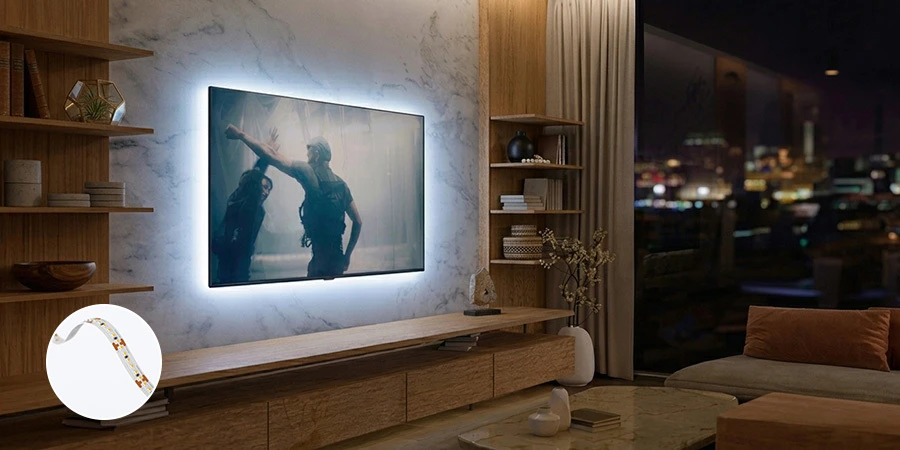
This is the kind of light you use when your living room shifts into a more relaxed mode—when you're taking a quick nap or watching something that doesn't rely on intense visuals (think Judge Judy or 60 Minutes). It's there to keep the space softly lit while protecting your eyes. For this setup, a moderately bright accent LED strip is ideal.
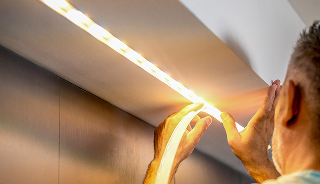
Getting this done is surprisingly simple. Since TVs aren't massive, the power draw is usually low. In many cases, you can even use a compact power supply that hides behind the TV and plugs directly into an outlet. And because most screens are rectangular, installing the strips is straightforward—just clean, straight runs and a couple of LED connectors.
It's definitely the kind of weekend DIY lighting project you could easily tackle with your kid!
Lights that Sync with TV Content
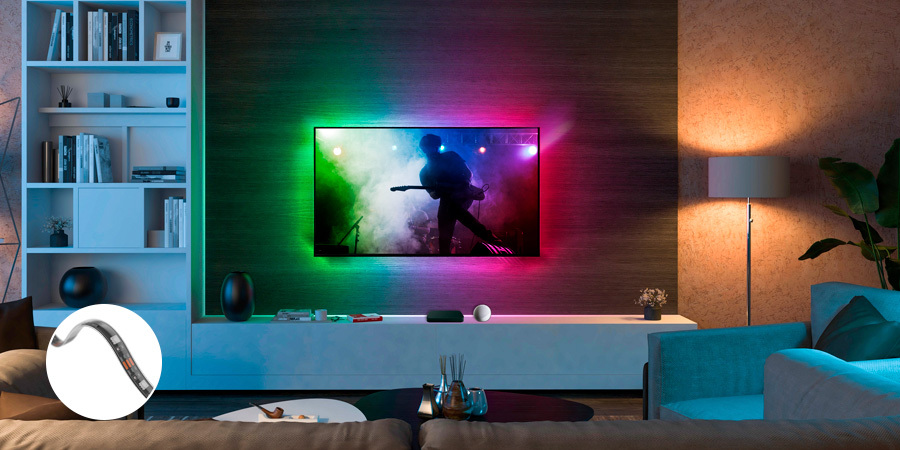
Who would've thought that the most advanced, high-tech lighting application for your TV—the one with the most impressive, pro-level results—would also be the easiest to set up? But it is. If you're watching Godzilla, a Harry Potter classic, or even trying to create the ultimate viewing experience for an NFL game, your best option is the Leona® HDMI RGB TV Sync Box.
Besides your TV, all you need is an HDMI source, like the one you already use for cable, Netflix, Prime Video, or any streaming platform. From there, the system is designed to be plug-and-play, even for beginners, and comes ready to fit most TV back panels.
You'll likely spend more time choosing what to watch than installing it. And once it's running, it does exactly what you'd hope: matches the colors on your screen in real time, reacts to sound and action, and even syncs with music to bring your entire space to life.
Entertainment Center Lighting
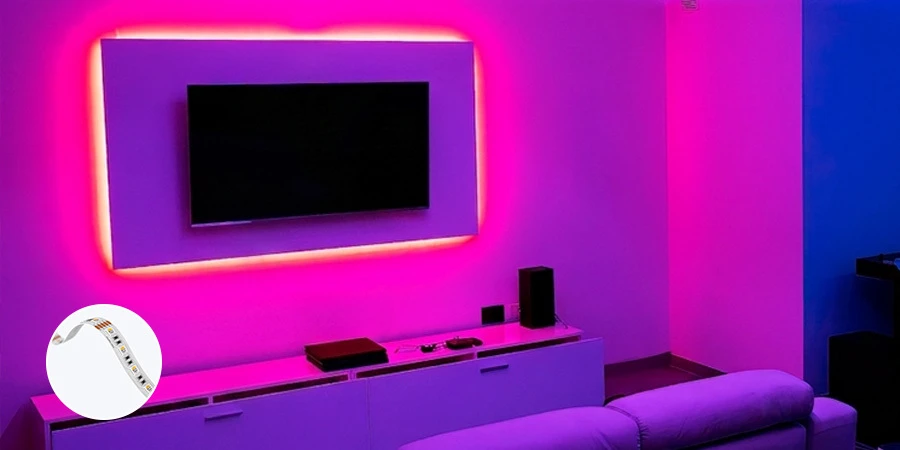
Imagine watching Fast & Furious with your die-cast miniature car collection, softly lit by LED strips installed inside a recessed aluminum channel, tucked into a groove along your media center shelves. And when the movie ends, you leave them on, letting that automotive vibe linger in the room as ambient lighting.
This type of upgrade focuses on the furniture around your TV or the surface it sits on. It's a great alternative to bias lighting when there's little to no space between the TV and the wall—or when there isn't a wall at all, but a built-in structure instead.
For this setup, we recommend an LED product that gives you both warm white light for relaxed viewing and color options for mood lighting. An RGBW LED strip is ideal—it lets you highlight books, decor, and collectibles around your TV while still providing a comfortable, everyday glow. And depending on the design of your entertainment center, there are multiple ways to integrate it seamlessly.
Start Your LED TV Backlight Project Today—It's Easy!
Want this project to be as easy and relaxing as kicking back on your couch to watch your favorite movie? We're not just talking about installation. Once it's set up, maintenance is just as simple: make sure there's at least 4 inches of space between the wall and your TV, and give it a quick wipe every now and then—dust tends to build up in hidden spots like the back panel.
With that in mind, you can see how straightforward this project really is. And it's even easier with a team of experts in TV backlighting (and LED strip lighting in general) on your side. Contact us today, and let the show begin!