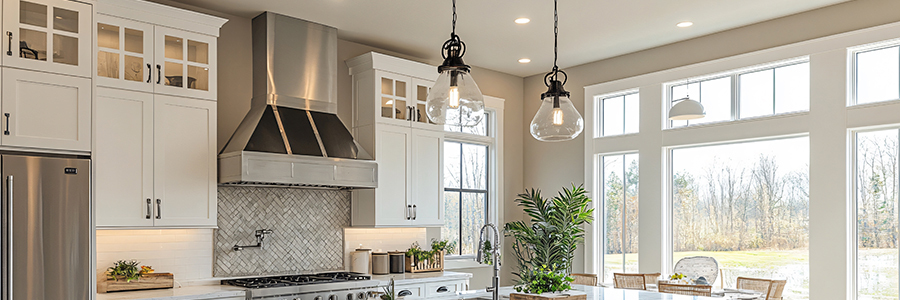
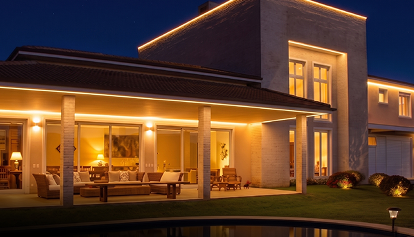

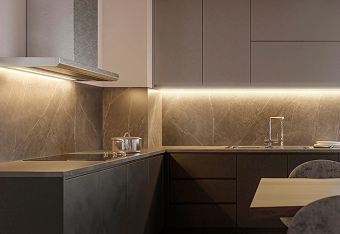

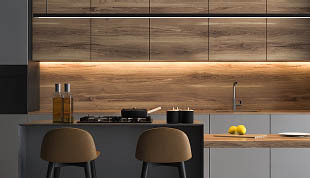


Kitchen Cabinet Lighting: How to Brighten Up a Dark Cabinet?
Automatic LED strip lights and kitchen light fixtures are key features inside modern kitchen cabinets. See how to apply them in your cabinet designs!
- -Investing in cabinet lighting is considered a valuable upgrade that enhances everyday kitchen interactions.
- -There are three main types of cabinet lighting: under-cabinet, above-cabinet, and inside-cabinet lights.
- -A variety of LED lighting solutions are available for cabinet interiors, like LED strips, light bars, and puck lights.
- -The choice of lighting and installation methods can be tailored to factors such as cabinet types and contents, door styles, smart features, and usage frequency.
We all use our kitchen cabinets to tuck away both essentials and things we could probably live without: oils and vinegars, tea for mornings, pots and pans, skillets, mugs, toasters, paper towels, zip-lock bags... And sometimes, if we’re being honest, a bit of everyday clutter.
No matter what's inside, cabinets are basically the backbone of our space. They’re what keep the cooking, the groceries, and the general chaos of daily kitchen life from completely taking over.
That’s exactly why good kitchen storage lights are such a game-changer. They turn a dark, frustrating search for a hidden spice or a sharp knife into a smooth, easy experience, while also making cleaning (and those see-through glass doors) way more manageable. In this blog post, we’ll help you answer key questions about cabinet lighting to find the right setup for your space.
What Are the Different Types of Cabinet Lighting?
Kitchen cabinets are the main housing for most of the lighting in your kitchen. Yes, it’s surprising to think that these boxes with doors, usually made of wood or PVC, don’t just store dry grains and mixing bowls, but also hold much of your kitchen’s lighting.
Understanding the three types of cabinet lighting—even if you’re only planning for cabinet interiors—is essential to good design. It helps clarify your options, since all cabinet lights must work in harmony and often share installation components. These are:
Under Cabinet Lighting
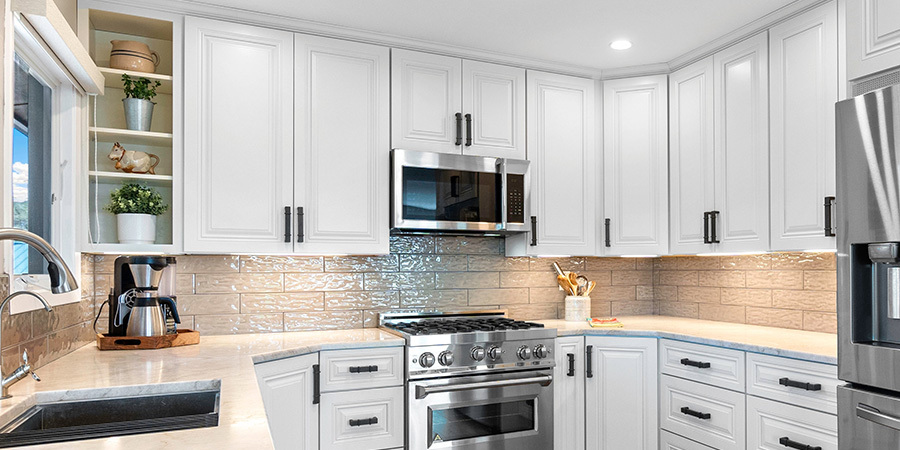
This installation involves task downlights on the bottom panels of your cabinets, either surface-mounted or recessed. They improve visibility for all countertop activities: slicing meat or fruit, reading recipes, kneading dough, washing your hands and veggies, or inspecting ingredients, among many other things
Above Cabinet Lighting
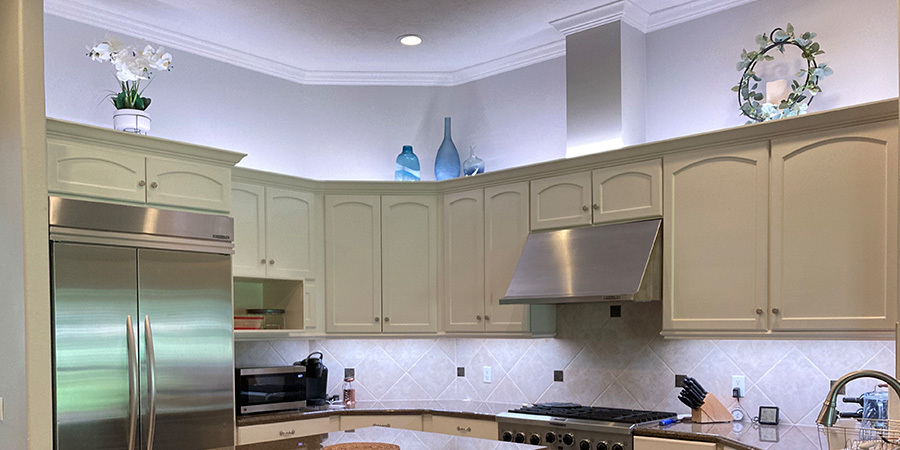
This consists of kitchen light fixtures mounted on top of your cabinets—that space very few of us have actually seen or can reach without a ladder. Its primary functions are to make it easier to clean up dust (which tends to pile up there), to illuminate decorative objects like wicker chickens or vintage utensils, or simply to provide a soft, decorative glow in the kitchen.
Inside Cabinet Lighting
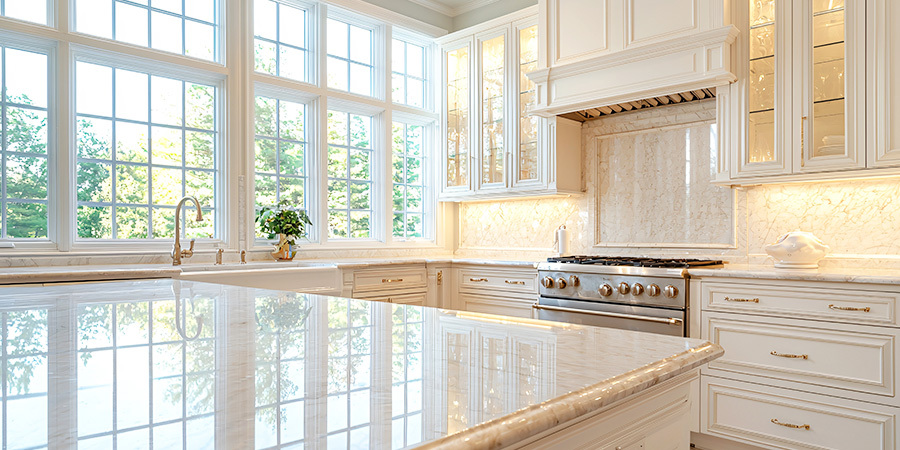
This application involves installing LED strip lights or other small, compact lights inside your cabinet shelves. Your choice of lighting and accessories will depend on several factors: what kinds of objects you store inside, how often you open and close the doors, whether the doors are glass or solid, whether the cabinets are lowers or uppers, and their layout. Let’s explore this specific type of lighting and all its possibilities.
Do I Really Need Inside Cabinet Lights?
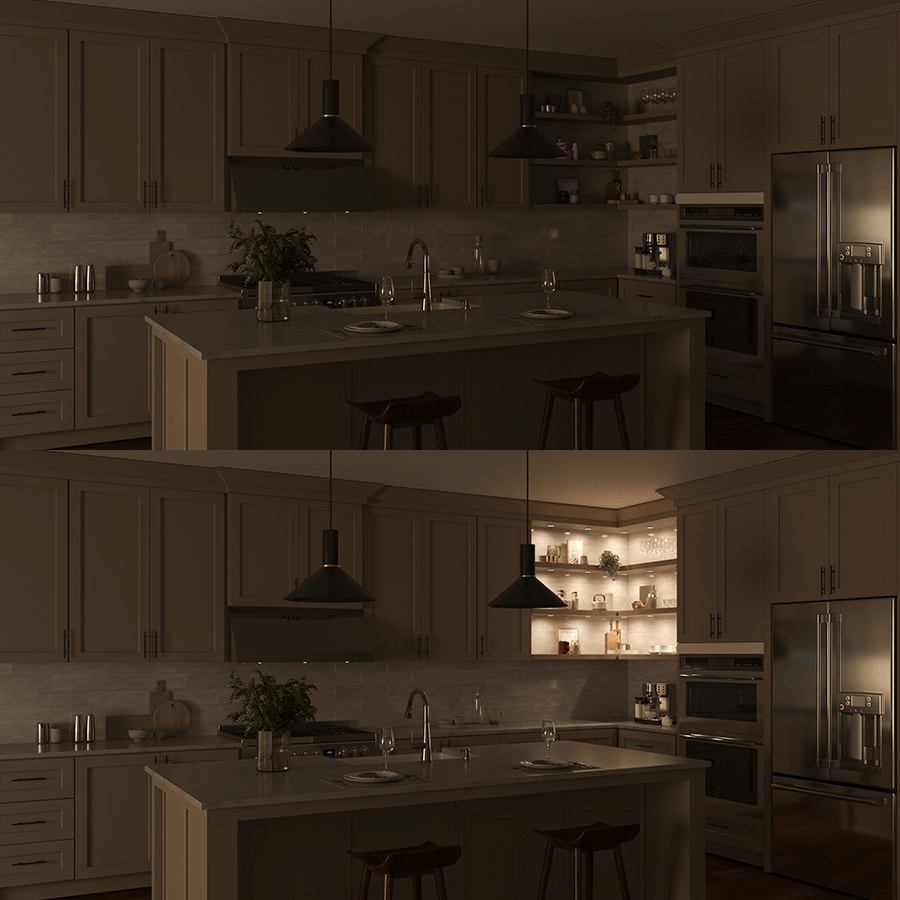
Once you discover interior cabinet lighting, you’ll wonder how you ever functioned without it. It’s one of those quality-of-life upgrades that sounds like a luxury until the first time you’re digging for a specific tuppwerware container at 10:00 PM to pack next day’s lunch and can’t find it.
For the day-to-day, it’s a total game-changer for https://www.flexfireleds.com/categories/led-strip-lights, especially during those early morning coffee runs when you don’t want to shock your sight with pendants. It makes cleaning infinitely easier, especially with how much dust and spilled flour hide in those dark back corners!
When it’s time to put away a big haul of groceries, the extra visibility helps you organize everything efficiently instead of just shoving cans. Plus, if you’re a home cook and need good illumination, it helps you keep your ingredient inventory at a glance so you don't realize you’re out of stock midway through a recipe.
Beyond the practical side, it just makes the whole kitchen feel high-end and a complete expression of your personality—it turns a dark storage box into a curated display of trinkets, decor, books, or porcelain.
How Do You Illuminate the Inside of a Cabinet?
Since LED technology is so diverse and adaptable, the Flexfire kitchen catalog offers three main solutions for lighting up your cabinet interiors. Each one has a specific installation method and unique qualities tailored to different needs, ensuring the kitchen essentials inside truly shine.
LED Light Strips
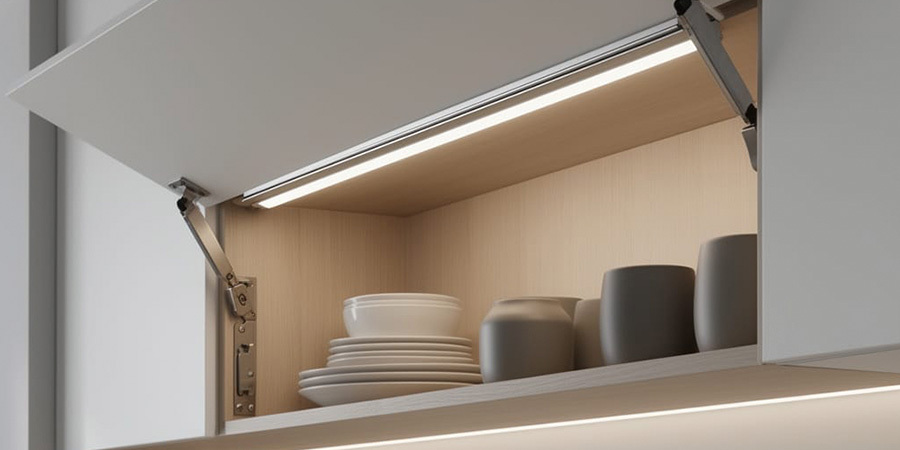
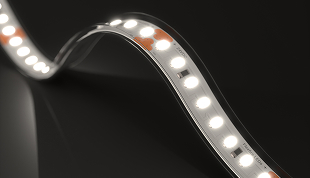
This is thin, durable tape backed with powerful adhesive and lined with small LEDs that create a continuous wash across your cabinet interior. It is very flexible, usually comes on a reel, and can be cut to a specific length.
- Pros: No hot spots or heavy shadows when paired with an aluminum mounting channel; low profile; highly customizable and cut-to-measure.
- Cons: If you mount the strips horizontally at the very top of the cabinet, the top shelf acts like an umbrella. Everything on the middle and bottom shelves will be in total darkness. Without protection, grease and dirt can build up, causing flicker and dulling or damaging the lights.
Let’s say you have a high-end glass-front cabinet displaying your wedding china. By running a single LED strip vertically up the inside corners (hidden behind the face frame), you create a soft, museum-quality glow that lights every shelf evenly without the bulbs being visible.
LED Light Bars
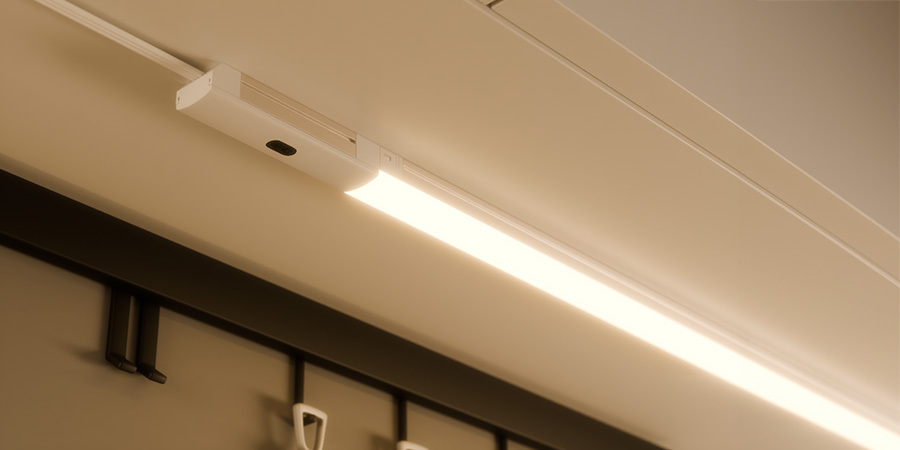
These are plug-and-play, DIY light sticks. They are basically LED strips, but linkable and already mounted in a protective housing—no accessories or aluminum profiles needed.
- Pros: Durable, easy to clean, and knock-proof; very easy to install and to link multiple bars together.
- Cons: Fixed lengths (if your cabinet is 18 inches, you'd have to use a shorter bar but you’d have less light overall.)
Imagine you have a deep, dark pantry or a blind corner cabinet. You mount a 10-inch light bar to the top of the cabinet. Because it’s in a protective case, you don't have to worry about accidentally hitting the light with a heavy soup can and breaking the LEDs.
LED Puck Lights
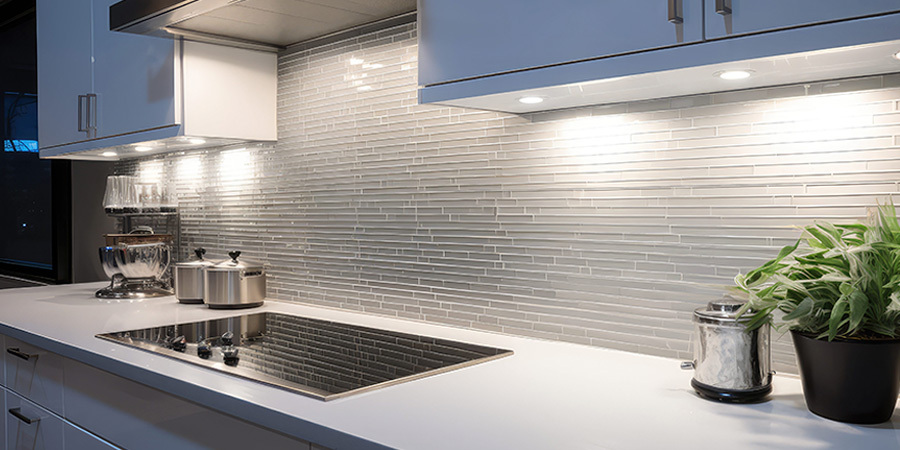
These are small, round fixtures that look like hockey pucks. They create a spotlight effect ideal for collectible displays—such as pottery and seasonal decor—and other kitchen cabinet accent applications.
- Pros: Great for showcasing specific items and illuminating reduced cabinetry space.
- Cons: Creates "scalloping" (dark triangles between the lights); items on the top shelf will block light from reaching anything below them, reducing visibility.
For example, you can highlight your Italian espresso machine and coffee sacks on a coffee station cabinet. One or two puck lights mounted directly above them create a focused "stage light" effect, making the area look intentional and stylish.
How to Power Kitchen Cabinet Lights?
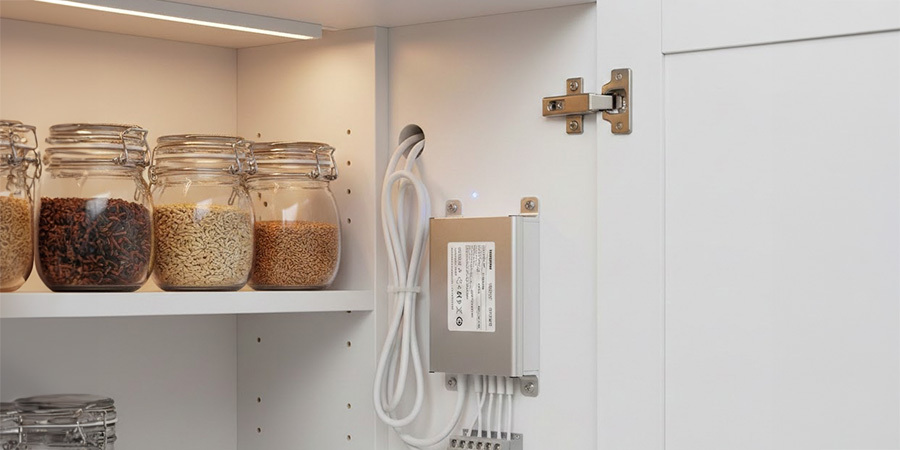
Whichever product you choose, it requires a dedicated power supply. As a rule of thumb, your power supply should have a wattage at least 20% higher than your lights' total power draw. You’ll also need to make sure the voltage (typically 12V or 24V) is an exact match.
The good news is that since cabinet runs aren't usually that long, the power draw shouldn’t be excessive.
The other huge benefit of working with cabinets is that they are the ultimate hiding spots. First, there’s almost always an outlet hidden inside or tucked away on top. Second, because they are full of nooks and crannies, it’s incredibly easy to conceal the power supply feeding your inside, above, and under-cabinet lighting, as well as other kitchen light applications.
What is the Best Color for Kitchen Cabinet Lights?
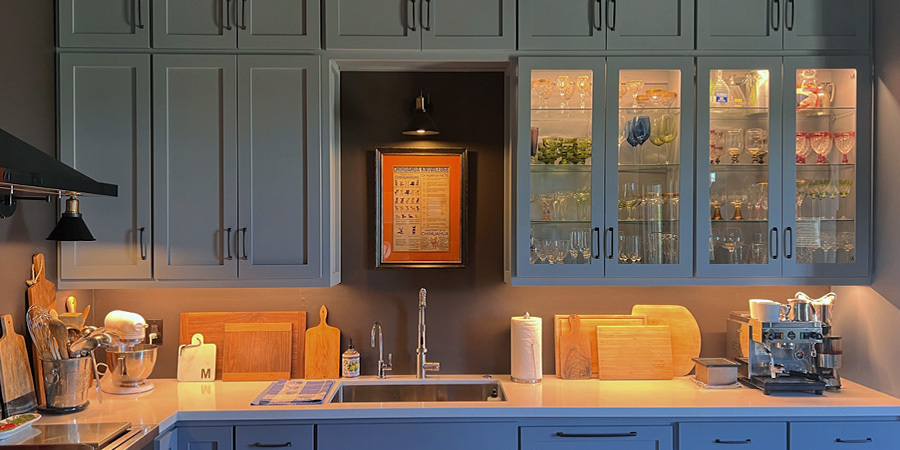
While you might occasionally think of using your 4-lite cabinets as kitchen holiday displays—for example, simulating little glowing windows in red, white, and blue for the 4th of July—most homeowners stick with white for their cabinet interiors.
There’s a good reason for this: inside cabinet lights are primarily functional, making them a key part of your home’s task lighting. Sure, when they’re dimmed low late at night, they act as beautiful accent or ambient lighting. But their main job is to boost visibility. White light is simply the best tool for the job: It sharpens textures, brings out true colors, and eliminates shadows, so you can see exactly what you’re looking for.
Should I Use Cool White or Daylight LED for Kitchen Cabinets?
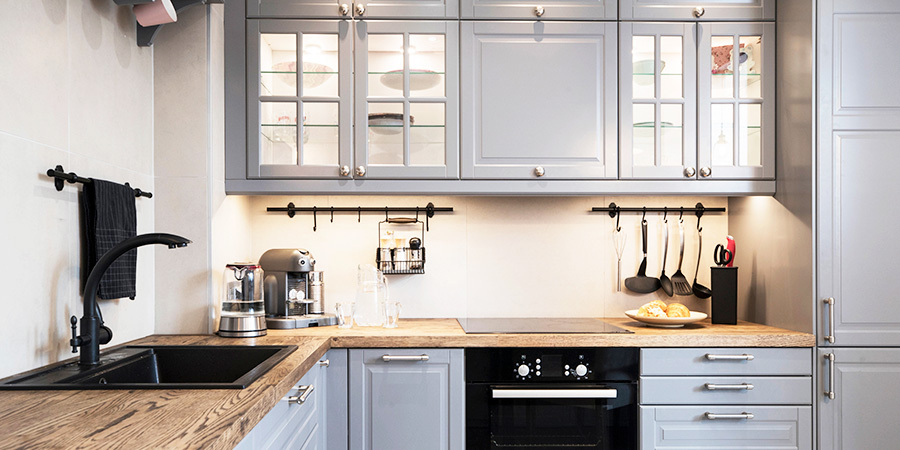
Choosing the right inside-cabinet CCT (Correlated Color Temperature) depends almost entirely on the color of your cabinets and the other lights already in your kitchen. You want the inner lights to complement—not clash with—your existing scheme. Follow these steps:
- Match Your Existing Lights: If your overhead recessed lights are a crisp 4000K, but your cabinet interiors are a warm 2700K, the cabinets will look "yellow" or "dingy" by comparison. If doing everything from scratch, aim for a more neutral 4000K CCT.
- Match Your Cabinet Colors: The color of finishes or paint inside the cabinet reacts differently to various temperatures—warm 2700-3000K is better for natural wood or oak, and neutral 3500-4000K works better for modern white, grey, and navy kitchen cabinets.
- Mind Your Contents: For glass displays, 3000K adds a sophisticated sparkle to pottery. However, for pantries and solid cabinets, 4000K is the better choice: this cooler, crisper light serves as functional task lighting, providing high contrast for easier label reading.
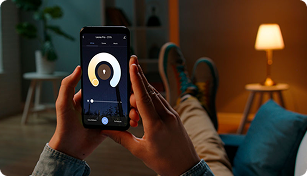
If you can't decide, look for tunable white LED strips. These allow you to adjust the temperature remotely or via a phone app after installation, so you can test exactly what looks best on your specific dishes and paint.
Is a Higher CRI Better for Inside Cabinet Lighting?
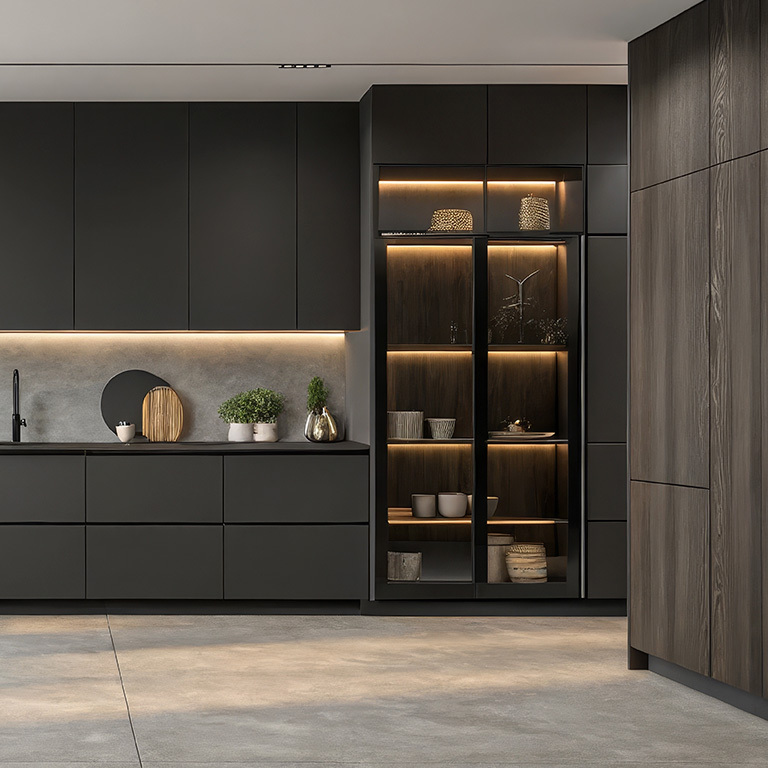
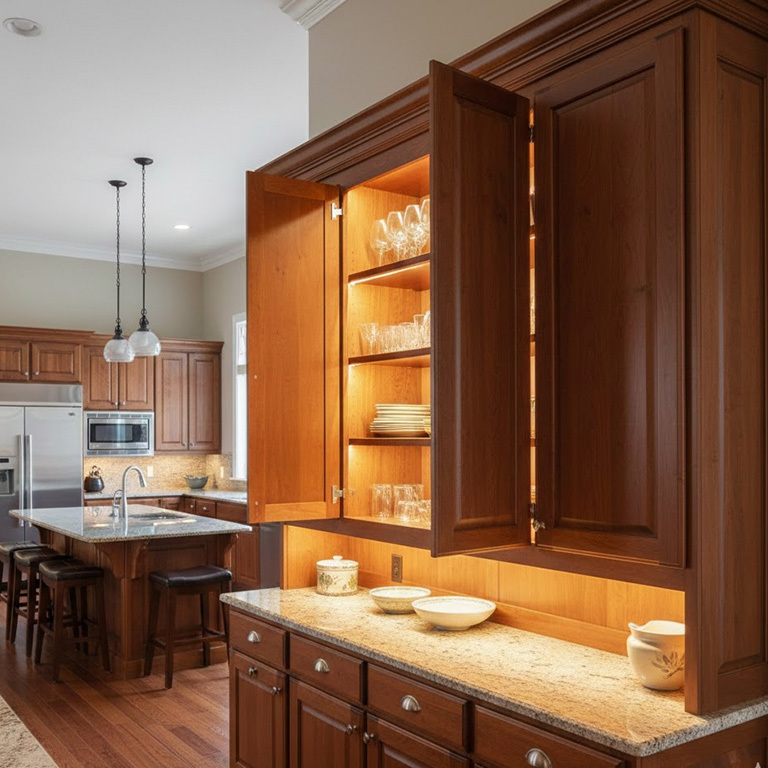
Your white LEDs’ CRI (Color Rendering Index) also comes into play. Its values (1-100) measure how effectively a light source makes the colors around it "pop." Inside your cabinets, that means accurately rendering both the finish of internal panels and the items stored within.
While a 90+ CRI is the gold standard for kitchen lights, its importance shifts slightly when you're illuminating the interior, depending on whether your doors are solid or glass:
- Glass Doors: High CRI is essential because your cabinets become attention-grabbers. You want your silver or glassware, antiques, or colorful ingredients to look as vibrant and true-to-life as possible.
- Solid Doors: While you still want good visibility, the “gallery” element is less critical, allowing more flexibility—though a higher CRI still helps you distinguish chili powder from cinnamon.
What is the Best Brightness for Kitchen Cabinet Lights?
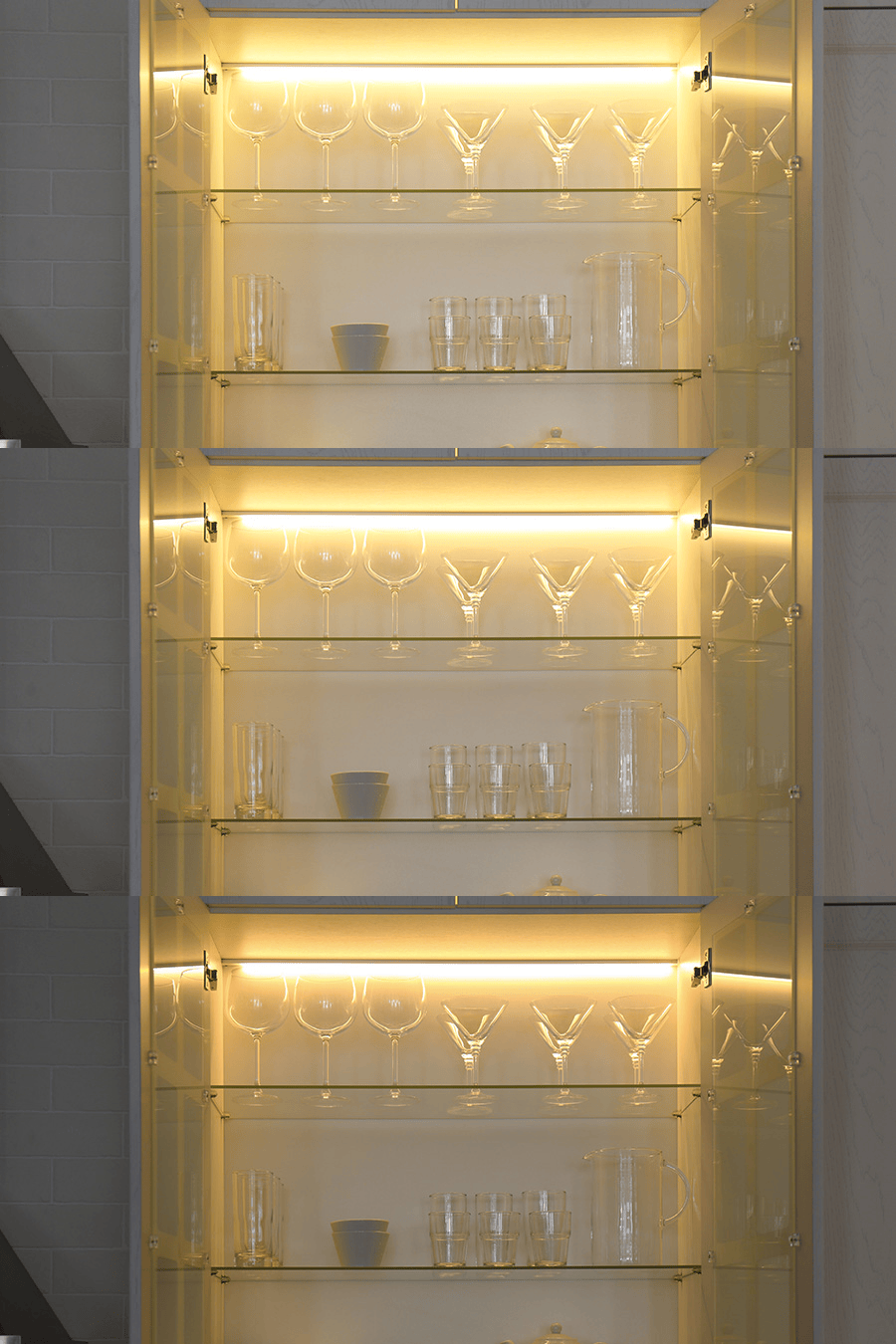
The best brightness for inside your cabinets—measured in lumens per foot (lm/ft)—isn't a one-size-fits-all number. That’s why, just like with CCT, it depends on whether you're lighting a pantry to find a snack or a glass cabinet to show off your favorite mugs.
For glass-front cabinets, aim for 100-300 lumens per foot to create a soft accent. This lower intensity provides enough light to highlight the textures and colors of your dishes without creating distracting glare or turning the cabinet into an overwhelming "glowing box."
In contrast, pantries and solid-door cabinets require functional task lighting, ideally 300-500 lumens per foot. Because deep cabinets and dark corners tend to swallow light, this higher brightness is essential for cutting through shadows, making it much easier to keep your space organized or to quickly rotate your stock and check expiration dates.
Are Smart Kitchen Cabinets Worth It?
Adding smart capabilities to your inside-cabinet lighting isn't just about being able to turn it on with your phone—it’s about making the lights responsive to how you actually use your kitchen and your daily routines, pantry habits, and time of day. Here are the primary benefits and features that smart lighting brings to the table, from sensors to biophilic lighting:
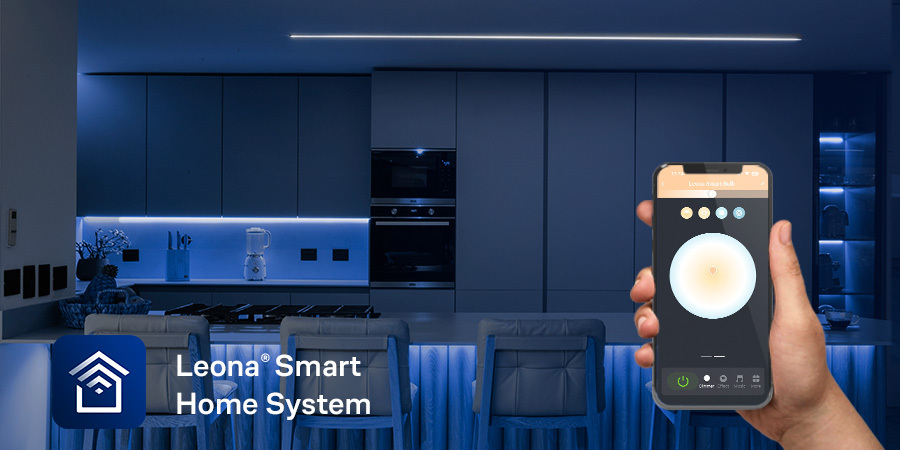
Try all these features with the Leona® Smart Home App today!
Light Up Cabinet Interiors Today with Flexfire!
To turn your kitchen vision into reality, get in touch with our team of cabinet lighting experts today. We make our expertise and products just as easy to find as everything else inside a well-lit cabinet!