


How the Right Lighting Makes Hospitality Spaces Picture-Perfect
Hospitality clients want guests to walk through the door and reach for their phones. A bar nook that shows up in dozens of tagged posts, a wall niche lit by high-quality LED strip lighting to perfectly frame a photo opportunity, a feature wall that becomes the backdrop for every table in the room: these are not accidents. They are the product of lighting decisions made at the design stage.
A space that looks beautiful to the human eye does not always photograph well. Cameras are less forgiving than eyes. Cameras don't do well with extreme contrast, blue-white light sources, and spaces that lack visual depth or a clear focal point. The lighting conditions photographers look for are warm lighting, layered depth, and an intentional focal point. These are the same conditions that make a bar or restaurant perform naturally on social media.
Photography and hospitality lighting benefit from the same underlying decisions. When you make the right choices at specification time, the result is a space that photographs well without the guest having to work at it.
Get the Color Right
The single most effective lighting change you can make to create a more photogenic hospitality space is selecting the right color temperature. Cool white sources (anything above 4000K) render blue-white on camera. This flattens complexions, drains warmth from food and drink, and makes a space feel clinical in a photo, even when it looks just fine in person.
Sources in the 2700K to 3000K range produce warm, amber-toned light that reads as rich and inviting in photographs. Skin tones look better under warm light. Food and drink look more appetizing. The space as a whole has a color quality that's immediately appealing in a photo, which is what drives someone to save it, share it, or visit the space themselves.
High CRI (Color Rendering Index) lighting, generally 90 or above, also matters in spaces designed to photograph well. High CRI sources render colors accurately, so the rich tones of a leather banquette, a tile feature wall, or a branded color scheme appear in the photo the way they look in person. Low CRI sources shift and flatten colors in ways that photographs make obvious even when the naked eye misses them.
Layer the Lighting
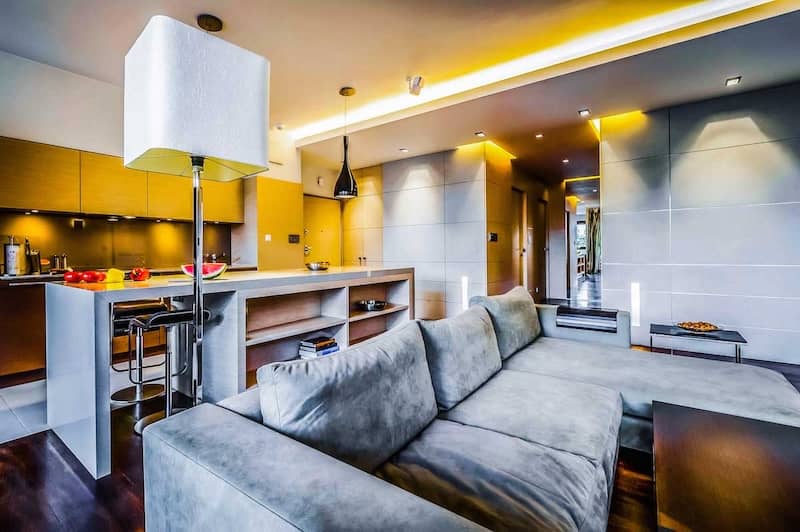
A single overhead light source produces flat, even illumination that's difficult to photograph with any interest. Design the space with multiple light sources to create layers. Include ambient, task, and accent sources at different levels. This creates depth, shadow, and visual hierarchy, giving a photo dimension.
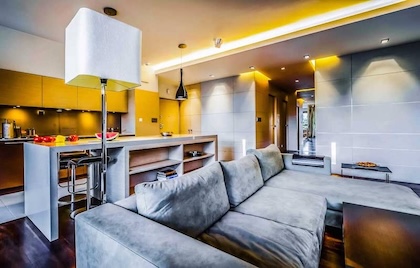
Cove lighting photographs especially well because it wraps the ceiling in a warm wash that gives the room a sense of height and volume. The ceiling becomes part of the composition rather than an empty plane at the top of the frame. A dining room with warm cove lighting, dimmed table pendants, and accented architectural details offers a photographer or a guest with a phone multiple visual planes to work with in a single shot.
From a specification standpoint, this means designing for depth rather than coverage. The goal isn't to illuminate every corner at the same level. It's to create an environment with lit zones and shadow zones, highlights and recesses, giving the eye somewhere interesting to land.
Create a Focal Point
The spaces that perform best on social media tend to have something the guest wants to stand in front of or sit near. There are many options when considering focal points, including:
- A backlit feature wall
- A bar with edge-lit shelving behind it
- A neon sign above a booth
- An arch framing a table in warm light
These are not purely decorative details. They are content stages, and guests use them accordingly.
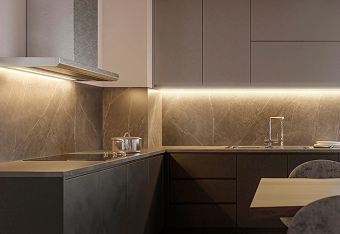
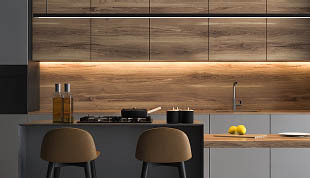
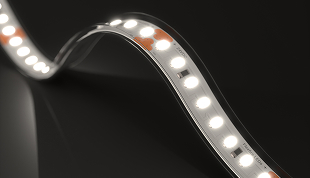
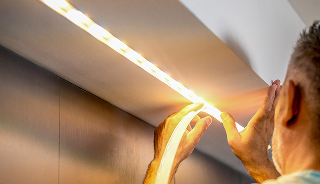
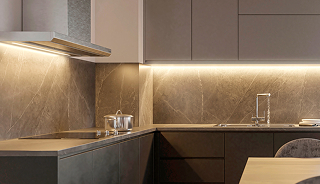
LED strip lighting is one of the most effective tools for building these moments. Backlit panels and feature walls use strips mounted behind stone, glass, or a panel surface to create a glowing backdrop. Edge-lit shelving uses strips positioned to illuminate glass shelves from below or above, making product displays appear to float.
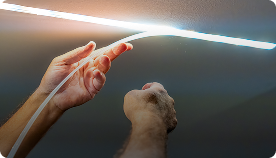
Neon-style LED strips let you create custom signage or graphic elements without the fragility, heat, or maintenance demands of traditional neon. An arch is easily and discreetly lit using flexible LED channels.
For focal-point applications where the client may want to change the effect over time, RGB and RGBW LED strip options offer color flexibility after installation. RGBW strips include a dedicated white channel alongside the color channels, producing cleaner whites and more accurate neutral tones. That allows a wide range of lighting scenes.
Add Dimming Capabilities
A photogenic hospitality space during a lunch rush looks different than the same space on a Friday evening. The brighter, more neutral lighting that works at noon is not the soft, moody lighting that has guests reaching for their camera at 9 p.m.
Dim-to-warm LED strips are especially effective in hospitality spaces that need to transition across service periods or event types. As brightness decreases, the color temperature drops toward 1800K, creating a warmer, more atmospheric quality at lower light levels without any fixture change. The space becomes more intimate and visually rich in the evening. Dimmable lights allow for a photo opportunity at any time of day.
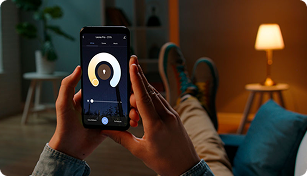
Independent dimming control on each lighting layer, with ambient, task, and accent sources on separate circuits, allows you to set the mood for the moment. A lighting system that dims the cove, lowers the task lighting, and holds the accent strips at a warm, low level creates the kind of environment that makes guests reach for their phone before they even order.
Use Lighting as Marketing
A hospitality space that photographs well markets itself. Every tagged post, shared reel, and photo saved to a guest's camera roll is content that the client does not pay for. For designers and contractors working in hospitality, understanding which lighting choices produce photogenic environments is a practical business skill, not just an aesthetic one.
The best LED lighting for a hospitality business creates photogenic spaces by using warm color temperature, layered depth, strong focal points, and controlled dimming. These are the same qualities that create spaces people want to spend time in. The aesthetic and business outcomes point in the same direction. That alignment should be built into the specification from the start.
Video